Your Easy Engagement Ring Buying Guide
Shopping for an engagement ring is an exciting step, but it can quickly feel confusing. Between tricky jewelry terms, diamond options, budgeting and trying to secretly figure out your partner’s ring size, there’s a lot to handle.
This engagement ring buying guide keeps things simple. It breaks down how a ring is built, which settings last the longest, popular styles in 2026 and how to pick the right fit with total confidence.
What Is Engagement Ring Anatomy and Why Does It Matter?
An engagement ring isn’t just a simple metal band with a diamond stuck on top. It’s built to keep the gem secure while looking good on your finger. Knowing a few basic parts helps you talk to jewelers without confusion, pick a style that works for your daily routine and get the most out of your budget.
Simply put, a ring is split into two main sections: The Head (the top structure holding the stone) and The Shank (the metal loop that goes around your finger).
What Parts Make Up the Head (Upper Structure)?
The head is the top portion of the ring designed to securely hold and display the primary gemstone.
- Center Stone: The central diamond or gemstone featured at the focal point of the design.
- Prongs (Claws): Small metal tines extending upward to grip the crown of the stone. Traditional heads usually feature four or six prongs.
- Bezel: A solid metal collar that encases the outer perimeter of the center stone for maximum security.
- Gallery Rail: A horizontal metal bar typically connecting the prongs halfway up the head. It reinforces the frame to keep prongs from spreading outward.
- Bridge: The base framework of the head that rests directly above the finger.
What Parts Make Up the Shank (Lower Band)?
The shank is the circular band that fits around the finger to support the weight of the head.
- Shoulders: The upper sides of the shank that taper or slope upward to meet the head structure.
- Base (Sizing Area): The bottom portion of the band sitting against the palm side of the hand. This solid metal section is where jewelers cut or add metal during resizing.
Key Components at a Glance
| Component | Simple Definition | Role in Daily Wear |
| Head | Upper mounting structure | Holds and displays the center stone securely |
| Shank | Metallic band around the finger | Delivers balance, shape and overall support |
| Prongs | Metal claws over stone crown | Clamps the gemstone firmly in place |
| Gallery Rail | Horizontal metal bar inside head | Stabilizes prongs to prevent bending |
| Base | Bottom section of metal band | Allows jewelers to adjust and resize the ring |
Which Setting Type Is Best for Your Daily Lifestyle?
A “setting” refers to how gemstones are mounted onto the ring frame. Each style offers unique trade-offs between brilliance and protection.
- Prong Setting: Secures the center stone using minimal metal claws to maximize light entry and sparkle. However, exposed stone edges can occasionally catch on delicate fabrics.
- Bezel Setting: Encases the perimeter of the stone in metal. It offers high protection against impacts and snagging, making it ideal for active lifestyles or healthcare workers.
- Halo Setting: Encircles the center stone with smaller accent diamonds, creating the visual effect of a larger center stone while adding surface shine.
- Pavé Setting: Features tiny diamonds set closely along the shank with miniature beads, creating the appearance of a continuous paved band.
What Are the Top Engagement Ring Trends for 2026?
Modern trends focus heavily on personal expression, practical daily wear and value.
Popularity of Elongated Diamond Cuts
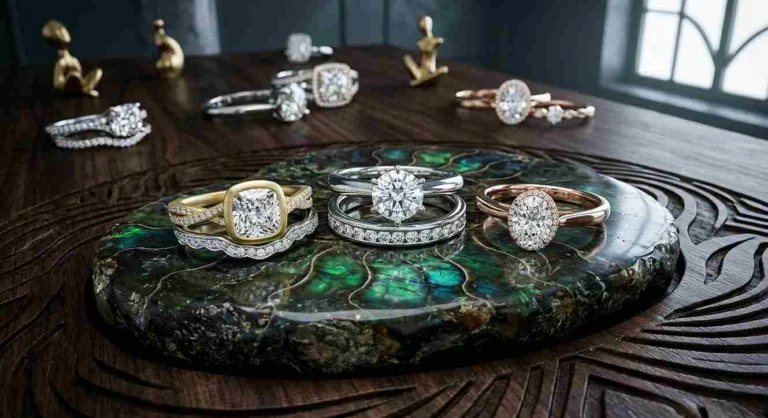
While classic round brilliant cuts remain popular, elongated diamond shapes lead current market demand. Cuts such as Oval, Elongated Cushion, Radiant and Marquise cover more surface area on the finger, making the stone appear larger than a round cut of identical carat weight.
Dominance of Lab-Grown Diamonds
Lab-created diamonds continue to grow rapidly in popularity. Chemically and optically identical to mined diamonds, lab-grown options typically cost approximately 60% to 80% less depending on carat weight and quality. These savings allow couples to choose larger stones or higher-grade metal settings.
Return of Warm Yellow Gold
14k and 18k Yellow Gold settings have reclaimed top popularity over white gold and platinum. Yellow gold offers a warm contrast against white diamonds and requires less ongoing maintenance than white gold (which requires periodic rhodium re-plating).
Note: While yellow gold holds its tone, all gold alloys develop minor surface scratches over time that require occasional polishing.
Unique Gemstones & “Toi et Moi” Settings
Couples are increasingly turning to colorful gemstones like teal sapphires, emeralds and salt-and-pepper diamonds. Sapphires rank 9 on the Mohs hardness scale, making them durable enough for daily wear. Additionally, “Toi et Moi” (You and Me) settings featuring two distinct gemstones side-by-side on one band remain a top trend.
How Can You Secretly Find the Right Ring Size?
Finding the correct ring size on your first attempt avoids immediate returns or resizing delays after a proposal. For extra tips from real buyers who have been through the process, you can check out this crowdsourced Reddit Engagement Rings FAQ Guide.
Subtle Sizing Methods
- Trace an Existing Ring: Borrow a ring your partner wears on their left-hand ring finger and trace its inside circumference on paper.
- Enlist a Friend: Have a close friend casually bring up jewelry styles or try on fashion rings together.
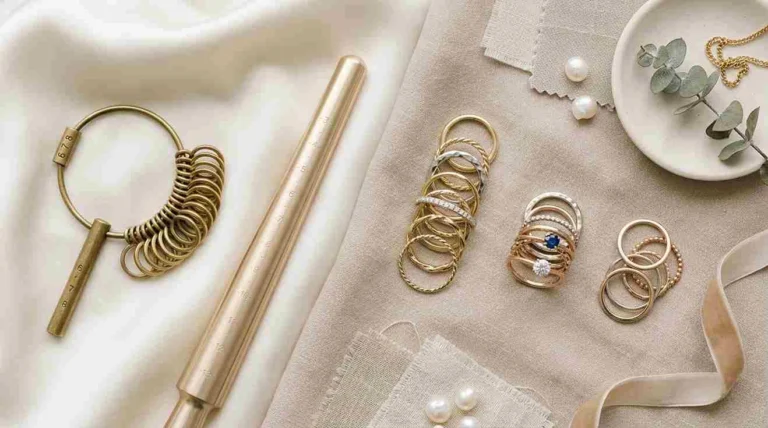
- Use an Online Ring Size Calculator: Use our interactive Ring Size Calculator to convert millimeter measurements directly into US, UK or EU ring sizes.
What If You Are Between Sizes?
If measurements fall between two sizes, it is generally best to size up slightly. Lowering a ring size by removing a tiny piece of metal from the base is a simple process for jewelers, whereas stretching a tight ring can weaken the shank.
What Important Steps Should You Take Before Buying?
1. Establish a Grounded Budget
Avoid outdated guidelines suggesting you must spend two or three months of salary. Build a plan based strictly on your financial health.
- Set a strict budget cap before visiting stores or browsing online.
- Reserve roughly 10% of your budget to comfortably cover local sales taxes, insured shipping or potential resizing costs.
2. Match Profile Height to Routine
Always evaluate head profile height. Tall settings elevate the stone high off the finger, which can catch on clothing or equipment. If your partner works heavily with their hands, select a low-profile head or a smooth bezel setting.
3. Verify Guarantees & Insurance
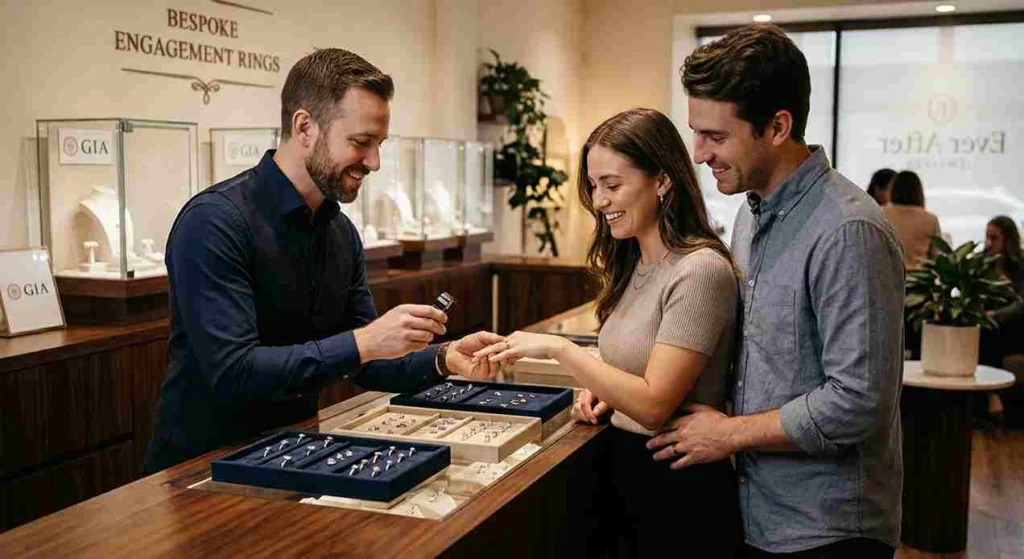
- In-Store vs. Online: In-store shopping allows you to inspect stones under natural lighting. Online shopping offers competitive pricing and larger inventories. Ensure online sellers offer insured shipping and independent grading certificates (e.g., GIA or IGI).
- Ring Insurance: Protect your ring against loss, theft or damage by adding a jewelry rider to your home insurance or purchasing specialized jewelry coverage.
Frequently Asked Questions
1. What is the difference between the head and the shank of a ring?
Ans: The head is the upper framework designed to hold the gemstone. The shank is the metallic band that circles around the finger to support the ring structure.
2. Which ring setting is safest for an active lifestyle?
Ans: A bezel setting is considered the safest option for active lifestyles because a protective metal collar surrounds the edge of the center stone, preventing chips and snags.
3. Are lab-grown diamonds covered by jewelry insurance?
Ans: Generally yes, though policies vary by provider. Insurance companies typically cover lab-grown diamonds based on the appraised value or purchase receipt provided.
4. Does resizing an engagement ring damage its metal structure?
Ans: Standard resizing within 1 to 2 sizes by a professional jeweler typically does not compromise structural integrity. However, resizing complex pave bands or making extreme size adjustments can weaken stone security along the shank.