Choose a Wedding Ring | What Should You Look for First?
Picking a ring you wear every day is a big deal, like choosing a favorite jacket you never take off. With so many colors, metals and prices out there, learning how to choose a wedding ring can feel a bit confusing.
Think of your wedding ring as a little partner that goes everywhere with you—doing dishes, working and playing outside. You want to pick something that looks great, stays tough and lasts a lifetime without breaking.
What is the Difference Between Engagement and Wedding Rings?
While both rings represent romantic commitment, they serve very distinct roles in your marital journey and are designed differently to suit those roles:
- Engagement Ring: Traditionally presented during the proposal, featuring a single, prominent gem such as a raised solitaire diamond, halo setting or colorful center gemstone.
- Wedding Band: Exchanged during the actual ceremony vows, generally featuring a sleeker, flatter profile that can be plain metal or set with a line of smaller accent stones.
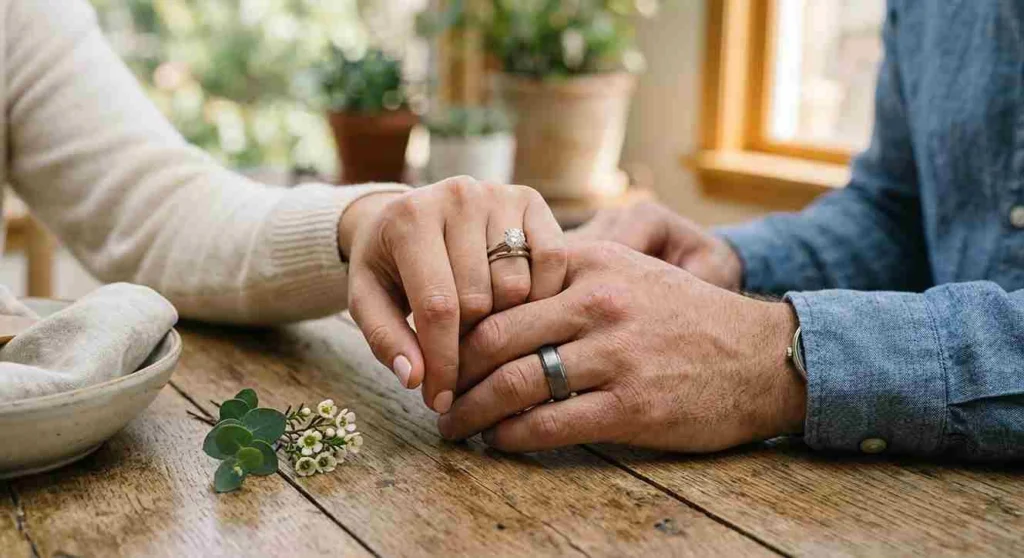
After marriage, most brides choose to stack both pieces on the same ring finger. Understanding this distinction early on helps you select a complementary set rather than two competing pieces that clash in height, color or style.
How to Set a Realistic Budget Before Shopping?
Setting a realistic spending limit early helps narrow down your choices without stress. Wedding ring prices vary widely based on the metal, design, and presence of diamonds:
- Sterling Silver & Alternative Metals (Titanium, Tungsten): Usually run between $30 to $150, making them extremely budget-friendly and durable for daily wear.
- 14k Gold (Yellow, White, or Rose): Typically costs between $300 to $800 for standard bands, offering a perfect balance of long-term durability and classic beauty.
- Platinum & Diamond Bands: Generally range from $800 to $2,000+, depending on the weight of the platinum and total diamond carat weight.
Decide on your budget before stepping into a store or browsing online so you can focus on quality metals that fit your exact price range.
Which Metal is Best for Your Daily Lifestyle?
Knowing how to choose a wedding ring material depends heavily on your daily job and activities.
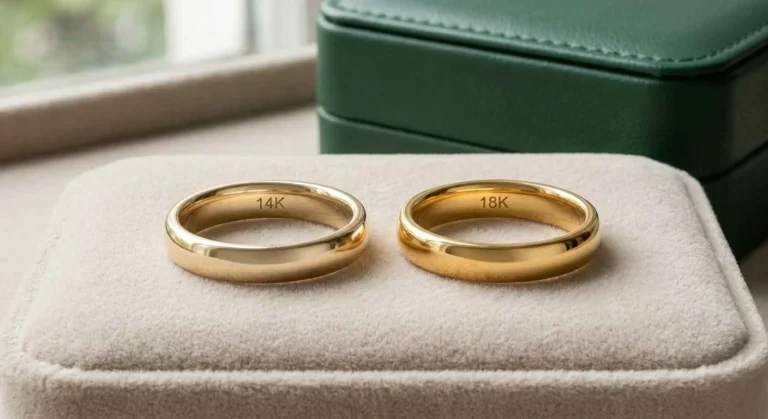
- Gold (Yellow, White, Rose): Traditional gold is available in various karat purities. 14k gold contains 58.5% pure gold combined with stronger base metals, offering the best overall durability for active hands. 18k gold contains 75% pure gold, providing a richer yellow color but a slightly softer surface. Avoid pure 24k gold entirely, as it easily scratches and bends out of shape under normal everyday pressure.
- Platinum: The densest of all precious metals used in fine jewelry (usually 95% pure). It is naturally hypoallergenic, extremely tough and retains its icy white finish permanently without fading or requiring plating. However, it carries a heavier price tag and feels heavier on the finger.
- Titanium & Tungsten: Ultra-modern, highly scratch-resistant options that cost significantly less than gold. Tungsten is virtually scratch-proof and maintains its shine forever, while Titanium is extremely lightweight. Both are highly popular choices for active grooms or professionals working with heavy machinery.
How to Match Your Wedding Band with an Engagement Ring?
If you plan to stack both pieces on one finger, their physical shapes, heights and metal densities must align comfortably without rubbing against each other or creating friction. High-set engagement rings easily allow a traditional straight band to slide beneath them seamlessly. However, low-set engagement rings leave an awkward physical gap, often requiring a contoured, curved or notched band for a seamless, flush fit.
Keep these practical balance rules in mind during your selection process:
- Matching Metal Hardness: Always try to pair identical metals together so a harder surface like platinum does not wear down or scratch a softer metal like 14k or 18k gold over long periods of wear.
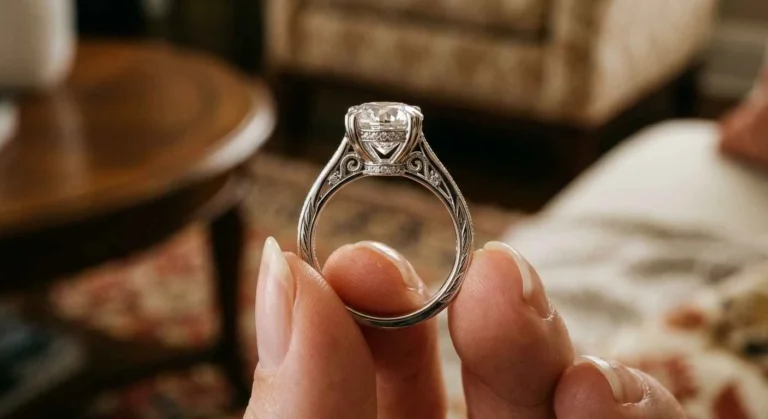
- Visual Balance & Proportions: If your main engagement ring features intricate vintage filigree or a large halo, pair it with a clean, unadorned band so the two pieces do not visually clash or overpower each other.
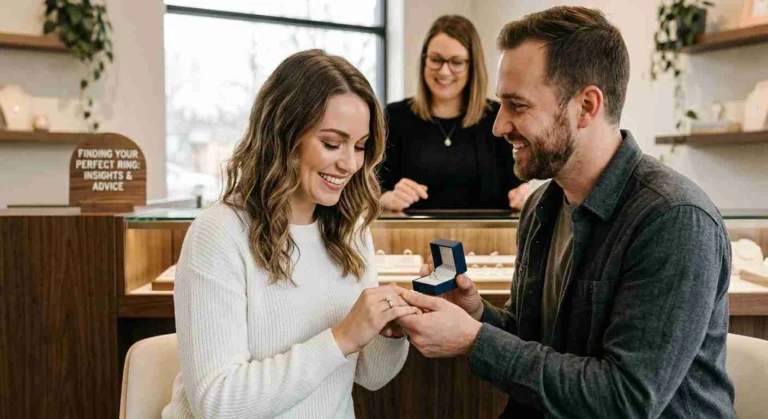
Many couples also discuss whether to shop together or keep the proposal a surprise when deciding how to choose an engagement ring that fits their shared vision.
How to Choose the Best Band Profile and Comfort Level?
Beyond the metal type, the physical shape (profile) of the band determines how comfortable the ring feels when you close your fist or type on a keyboard.
- Comfort-Fit vs Standard-Fit: Standard-fit bands are flat on the inside surface. In contrast, Comfort-Fit bands have a slightly domed, rounded interior wall. This rounded shape glides over knuckles much easier and reduces friction against the skin, making it the ideal option for daily wear.
- Band Width Considerations: Band widths generally range from 2mm to 8mm. Thinner bands (2mm to 3mm) look delicate and make fingers appear longer, while wider bands (5mm to 8mm) offer a substantial, heavy feel that works well for larger hands or standalone bands.
What Buyers Learn After Months of Daily Wear
Practical feedback gathered from long-term wearers across jewelry communities highlights several key issues that rarely get mentioned in retail showrooms:
- Edge Comfort Matters: Geometric rings with sharp, square outer edges often dig into adjacent fingers during heavy daily typing or workout sessions. Selecting a band with smooth, soft edges prevents constant skin irritation.
- Studio Lighting vs Real Life: High-resolution online photos use specialized macro lenses, digital editing and bright studio lighting. Always ask online sellers for raw, unedited indoor video footage taken in natural lighting to verify the actual metal tone, thickness and real-world sparkle before making a final payment.
How to Maintain and Clean Your Fine Jewelry?
Routine care keeps your band shining bright and free from oil, dead skin or dirt buildup over the coming decades. You can safely clean your band at home by soaking it in a small bowl of warm water mixed with a few drops of mild, fragrance-free dish soap. Gently scrub behind gem settings and inner grooves using a soft-bristled toothbrush, then dry it thoroughly using a clean, lint-free microfiber cloth.
Protect your ring with these simple preventative habits:
- Chemical Safety: Remove your band before entering swimming pools (chlorine chemically reacts with and weakens gold alloys) or handling household bleach and cleaning solutions.
- Separate Storage: Store your band in an individual soft cloth pouch or a dedicated compartment when swimming, exercising or sleeping to avoid surface scratches caused by contact with other hard jewelry pieces.
Frequently Asked Questions (FAQs)
Q1: Can all rings be resized later?
Ans: Plain gold, silver and platinum rings can easily be made bigger or smaller by a jeweler. However, rings with diamonds all the way around or rings made of titanium and tungsten, cannot be resized.
Q2: Do couples have to get matching rings?
Ans: No. Matching rings are completely optional. Most couples pick different styles, metals and sizes based on what they like and what feels comfortable to wear.
Q3: Which stone is best for avoiding scratches?
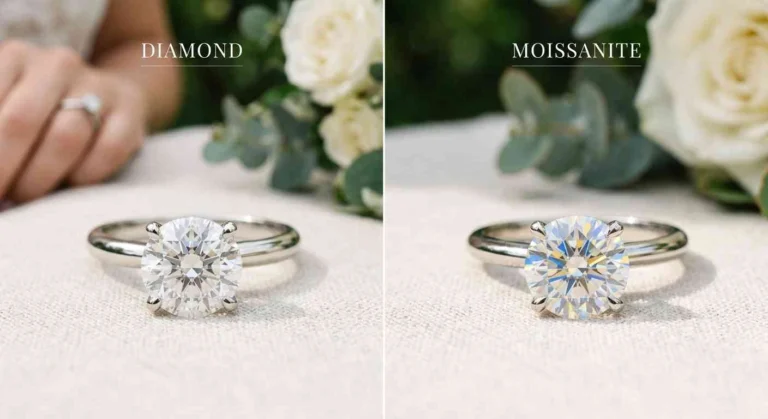
Ans: Diamonds are the strongest stone and do not scratch easily. Moissanite and Sapphires are also very strong and great choices for daily wear.