Lab-Grown vs Natural Diamond Rings: The Basics
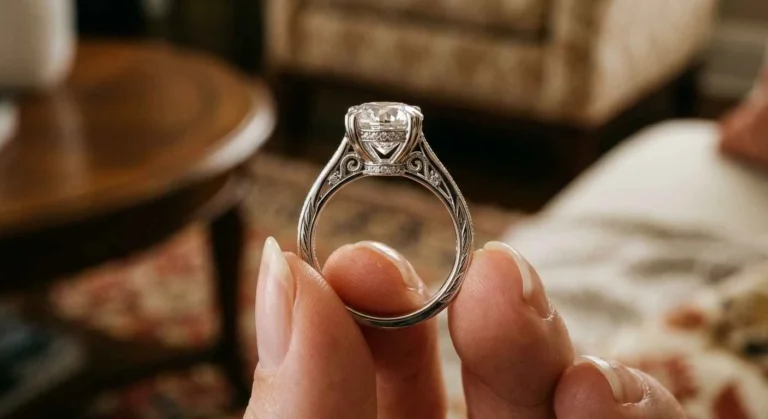
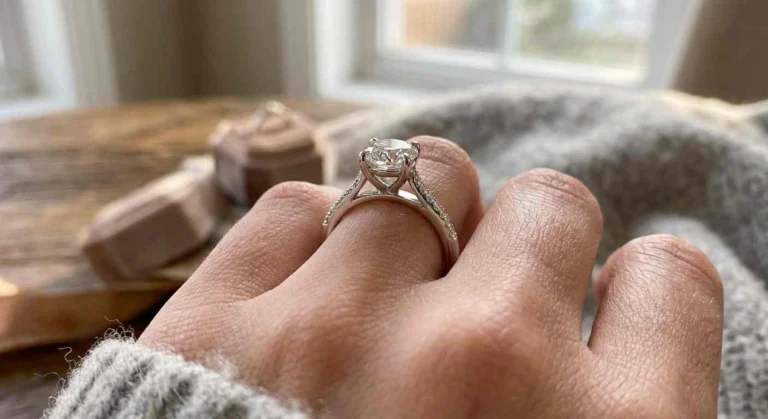
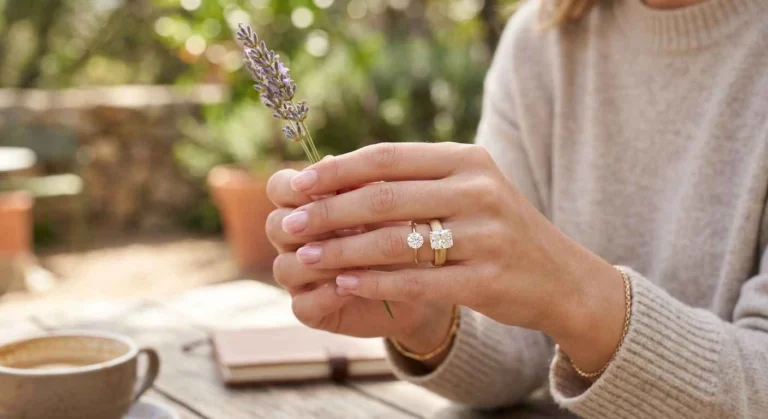
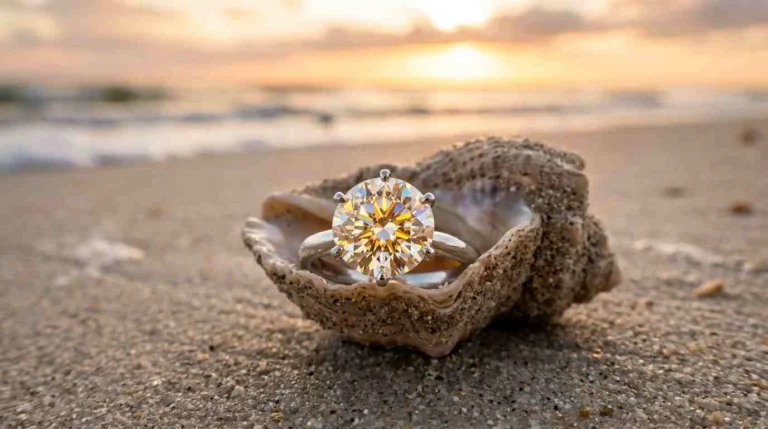
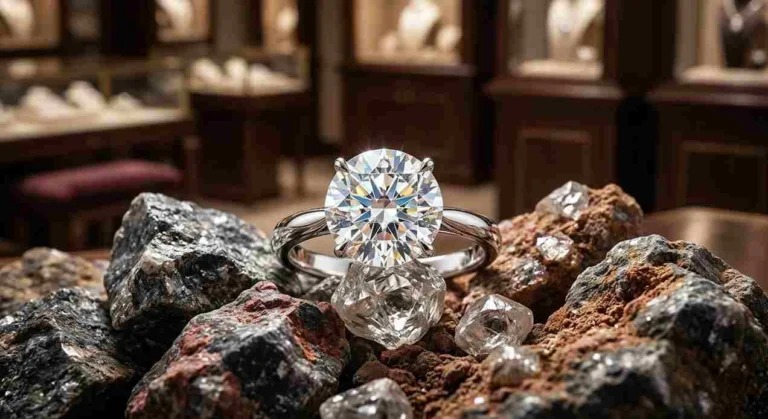
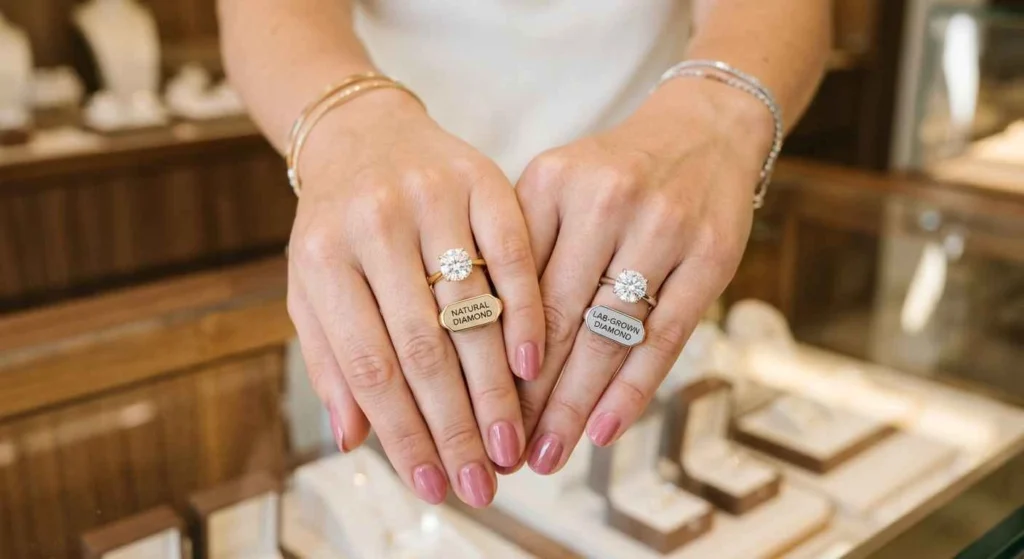
If you are comparing lab-grown vs natural diamond rings, you may wonder whether you can tell them apart. In many cases, you cannot tell the difference just by looking at the finished stone. Both are real diamonds with essentially the same chemical composition and crystal structure.
The main differences are how they form, where they come from, price, rarity and resale value. Knowing these differences can help you choose the right ring based on your budget and personal preferences.
Lab Grown vs Natural Diamond: Side by Side Comparison
This lab-grown vs natural diamond rings comparison looks at the key differences in origin, price, quality and appearance.
| Feature | Lab Grown Diamond | Natural Diamond |
|---|---|---|
| Origin | Grown in a controlled laboratory environment | Formed naturally inside Earth |
| Composition | Crystallized carbon | Crystallized carbon |
| Crystal structure | Diamond crystal structure | Diamond crystal structure |
| Hardness | 10 on the Mohs scale | 10 on the Mohs scale |
| Appearance | Can look the same as a natural diamond | Natural diamond appearance |
| Quality factors | Cut, color, clarity and carat | Cut, color, clarity and carat |
| Formation | HPHT or CVD technology | Geological processes |
| Typical price | Usually lower | Usually higher |
| Supply | Manufactured supply | Limited by natural formation |
| Ring styles | Works with common engagement ring settings | Works with common engagement ring settings |
| Origin identification | Requires appropriate gemological testing | Requires appropriate gemological testing |
The Federal Trade Commission requires sellers to clearly disclose when a diamond is laboratory grown rather than mined. When buying a ring, check the product description and grading documentation so you know what you are purchasing.
Do Lab Grown Diamonds Look Different From Natural Diamonds?
A well cut lab grown diamond can look very similar to a natural diamond. The difference is generally not something you can establish simply by looking at the finished stone.
Both types have the same basic carbon composition and diamond crystal structure. Their light performance can include brilliance, fire and scintillation. What you see depends heavily on the diamond’s cut, proportions, color, clarity and finish.
GIA explains that laboratory grown diamonds can have essentially the same chemical and physical properties as natural diamonds, while their growth features can be identified through specialized gemological examination.
For another perspective on the differences between natural and lab grown diamonds, you can also see how buyers discuss the topic in this Quora question.
What Actually Matters When Choosing Your Ring?
Once you understand the basic difference, the decision becomes more practical.
Your Budget and Diamond Quality
Budget is one of the main reasons buyers compare lab grown and natural diamonds. Lab grown diamonds usually cost less, which may allow you to choose a larger stone or different quality within the same budget.
For either type, compare the 4Cs: cut, color, clarity and carat, along with the diamond’s grading report. Do not compare diamonds by carat weight alone because cut, color, clarity and certification can affect both appearance and price.
Ring Setting, Metal and Size
Both lab grown and natural diamonds work with common engagement ring settings, including solitaire, halo, three stone, pavé and bezel. Your choice of metal, setting and band width affects the ring’s overall look and comfort.
Ring size depends on your finger measurement and the ring design not the diamond’s origin. If buying online, check the seller’s sizing and resizing policy before ordering.
Is a Lab Grown Diamond Ring Worth Buying for an Engagement?
Yes, it can be a sensible choice if its advantages match your priorities.
A lab grown diamond may make more sense if you want:
- A lower upfront diamond cost
- A larger stone within a fixed budget
- More choice at a particular price point
- A diamond created in a controlled laboratory environment
A natural diamond may make more sense if you place greater importance on:
- Natural geological origin
- Rarity
- Traditional appeal
- The history of a stone formed inside Earth
Neither option makes an engagement ring more meaningful by itself. The better choice depends on the wearer’s preferences, your budget and what you expect from the purchase.
Lab Grown vs Natural Diamond Ring Cost
Lab grown diamonds are generally less expensive than comparable natural diamonds. However, there is no single price difference that applies to every ring.
Price can change based on carat weight, cut, color, clarity, shape, certification, setting, metal and seller. Supply and production costs also influence market prices.
1 Carat Lab Grown vs Natural Diamond Ring Price
A useful price comparison should match the diamonds as closely as possible.
| Factor | What to Compare |
|---|---|
| Carat | Same or closely matched weight |
| Shape | Same shape, such as round or oval |
| Cut | Similar cut quality |
| Color | Similar color grade |
| Clarity | Similar clarity grade |
| Certification | Comparable grading documentation |
| Setting | Similar ring design |
| Metal | Same metal and purity |
| Final price | Complete ring price |
For example, comparing a 1 carat lab grown diamond in a simple setting with a 1.5 carat natural diamond in a more expensive setting would not tell you much about the actual price difference between the two diamond types.
How Are Lab Grown and Natural Diamonds Made?
Natural diamonds form deep inside Earth under high heat and pressure over geological time. Lab grown diamonds are made in controlled laboratory environments using two main methods, HPHT (high pressure high temperature) and CVD (chemical vapor deposition). Both methods grow diamond from a diamond seed.
Can a Jeweler Tell a Lab Grown Diamond From a Natural Ring?
A basic diamond tester can identify properties associated with diamond, but it cannot reliably determine whether the stone is natural or lab grown. A jeweler may need specialized gemological equipment to examine growth characteristics and confirm the diamond’s origin. When buying a ring, check the grading report and origin disclosure rather than relying on appearance or a handheld tester alone.
Can Lab Grown and Natural Diamonds Be Used in the Same Ring Styles?
Yes. Both can be used in many of the same engagement ring settings.
Common options include:
- Solitaire
- Halo
- Three stone
- Pavé
- Bezel
- Cathedral
The choice of diamond origin does not prevent you from choosing a particular setting. Instead, consider the setting’s appearance, security, maintenance needs and how it fits your daily routine.
How to Choose Between a Lab Grown and Natural Diamond Ring
When choosing lab-grown vs natural diamond rings, consider your budget, priorities and personal preference. If price is your main concern, a lab grown diamond may offer more size or quality for your budget. If natural origin and rarity matter more, a natural diamond may be the better fit.
For either option, compare the 4Cs, grading report, setting, metal and ring size before buying.
Frequently Asked Questions
1. Are Lab Grown Diamonds Real Diamonds?
Ans. Yes. Lab grown diamonds are real diamonds. They have the same basic chemical makeup and crystal structure as natural diamonds. The main difference is that lab grown diamonds are made in a laboratory, while natural diamonds form inside Earth.
2. Why Are Lab Grown Diamonds Cheaper Than Natural Diamonds?
Ans. Lab grown diamonds usually cost less because they can be produced in controlled laboratory settings. Natural diamonds are formed over long periods and must be mined. Supply, rarity and market demand also affect their price.
3. Will a Lab Diamond Ring Pass a Diamond Tester?
Ans. Yes. A lab grown diamond can pass a basic diamond tester because it has the properties of a diamond. However, a basic tester cannot tell if the diamond is lab grown or natural. Special testing may be needed to confirm its origin.