Why Vintage Ring Sizing Differences Catch Online Buyers Off Guard
Shopping for an antique ring is always exciting because every piece carries its own story and charm. But a lot of online buyers face an annoying surprise when their package arrives, the ring doesn’t fit like their modern ones do.
If you usually wear a size 6, an old size 6 ring might feel way too tight or keep sliding off your finger. This happens because old jewelry wasn’t made with today’s standard sizes. Knowing these vintage ring sizing differences will save you from headache, wasted money and the hassle of returning a piece you fell in love with.
Why Are Vintage Ring Sizes Different From Modern Sizes?
The way jewelry was made decades ago is very different from today’s production methods. Modern jewelry manufacturing relies on automated machinery, while vintage rings were crafted individually by hand.
Handcrafted Sizing vs Modern Machine Precision
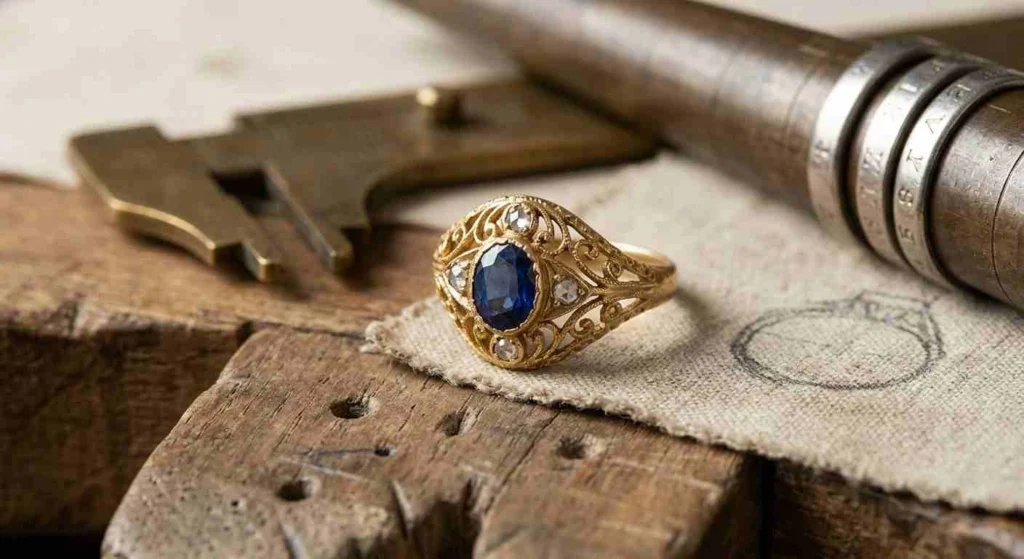
Today, jewelers use exact digital tools and automated molds to ensure every size 7 ring is identical in diameter. Fifty or one hundred years ago, jewelers relied on physical ring mandrels (measuring rods) and manual tools. Because each piece was shaped by hand, small millimeter variations were common.
Decades of Wear and Metal Thinning
Over decades of daily wear, the metal on the bottom of the shank (the lower band) gradually rubs off against skin, clothes and everyday objects. As the bottom of the shank becomes thinner, the inner space inside the ring opens up slightly. This creates subtle vintage ring sizing differences over time, making an older ring feel looser than its stamped size.
Regional Sizing Differences and Conversion Scales
Jewelry sizing standards were not globally unified in the past. An antique ring made in Victorian England used a letter scale (like Size M or N), whereas American rings used numbers (like Size 6 or 7). European rings often measured circumference in millimeters. When sellers convert old UK letters to US numbers, rounding errors can occur.
What Causes Sizing Variation in Antique Rings?
It is not just age that affects how a vintage ring fits. The physical structure and history of the ring play a major role in its fit.
Band Thickness and Tapering
A ring’s width changes how it feels on your finger:
- Wide bands: A wide vintage band covers more surface area on your skin. This creates extra friction, making the ring feel about half a size tighter than a thin ring of the exact same diameter.
- Tapered bands: Some antique rings have a wide front setting that narrows down into a thin band at the back, making accurate measurement on standard tools trickier.
Past Resizing and Repair History
Most vintage rings have had multiple owners throughout their life. Over 50 to 100 years, a ring may have been resized several times. When a jeweler cuts, stretches or adds metal, repeated alterations can turn a ring’s inner circle slightly oval rather than perfectly round.
Historical Hallmarks and Stamp Placement
Authentic vintage pieces feature official stamps (hallmarks) pressed into the inner band to show metal purity or maker’s marks. While usually small, these stamps occasionally leave a slight texture on the inner surface, altering the smooth feel against your skin.
How to Measure Vintage Ring Size Accurately?
Measuring a vintage ring requires a practical approach. Relying on simple paper strips or string tests usually leads to inaccurate results due to real-world vintage ring sizing differences.
Knuckle Size and Daily Finger Changes
Your finger size changes throughout the day based on temperature and activity. Hands expand in warm weather and shrink in cold conditions. Additionally, your ring must be large enough to slide over your knuckle comfortably without slipping off the base of your finger.
Measuring Inner Diameter vs Inner Circumference
The safest way to figure out a vintage ring’s true size is by measuring its inner diameter in millimeters (mm). Place the ring flat on a ruler and measure the inside space from inner wall to inner wall at the widest point.
| Inner Diameter (mm) | US Size Equivalent | UK Letter Size Equivalent | Fit Style Notes |
| 15.7 mm | Size 5 | Size J ½ | Best for delicate or narrow bands |
| 16.5 mm | Size 6 | Size L ½ | Standard fit; check band width |
| 17.3 mm | Size 7 | Size N ½ | Fits snugly if band is wider than 4mm |
| 18.2 mm | Size 8 | Size P ½ | Measure carefully if band is tapered |
Ring Profile: Flat vs Comfort Fit Interiors
Modern rings often feature a rounded “comfort fit” interior. Vintage rings often have a flat, straight-edged inner band. A flat interior sits flush against your skin and can feel tighter, so you may need a half-size larger for wide or flat vintage designs.
Can Vintage Rings Be Resized Safely Without Damage?
Not all antique rings can or should be resized. Changing the size of an old piece can weaken its structure or lower its historical value. Resizing typically costs between $40 and $150 and takes anywhere from a few days to two weeks depending on the complexity of the piece.
If you are unsure whether your ring can be resized, you can check this community discussion on sizing down a vintage ring.
Ring Styles That Are Safe to Resize
- Simple Solitaire Rings: Plain metal bands with a single center stone are straightforward for experienced jewelers to enlarge or shrink.
- Unadorned Bands: Solid gold or silver bands without engravings or side stones are easy to adjust.
Ring Styles That Should Never Be Resized
- Eternity Bands: Rings with gemstones set all the way around the band cannot be cut without destroying stone settings.
- Filigree and Enamel Rings: Intricate metal wirework (filigree) and glass enamel crack easily under heat or stretching.
- Soft Gemstones: Delicate stones like pearls, opals or emeralds can fracture from the heat of a jeweler’s torch.
Smart Alternatives If Resizing Isn’t Recommended
If your vintage ring is too loose and cannot be resized safely, consider these damage-free options:
- Sizing Beads: A jeweler can solder two small gold beads inside the bottom of the band to hold it snug against your finger.
- Spring Inserts: A flexible metal band inserted inside the ring creates a comfortable fit without altering the original metal.
- Ring Guards: Removable plastic or silicone coils wrap around the outer band to reduce fit size instantly.
Frequently Asked Questions
1. Why does my vintage ring feel tighter than my modern ring of the same size?
Ans: Vintage rings often have flat inner bands instead of modern rounded “comfort fit” curves. Additionally, wider vintage bands create more surface contact with your skin, making them feel roughly a half-size smaller.
2. Does resizing a vintage ring ruin its original value?
Ans: Minor adjustments on simple plain bands usually do not affect value. However, cutting through historical hallmarks, maker’s stamps or delicate filigree can significantly lower an antique ring’s collector value.
3. What is the best way to handle vintage ring sizing differences when buying online?
Ans: Measure a comfortable ring you already own across its inner diameter in millimeters. Share this exact millimeter measurement with the seller and ask them to confirm the inner diameter of the vintage ring before purchasing.
Final Buyer Checklist Before Ordering
Before purchasing an antique or vintage ring online, keep these three key steps in mind:
- Ask for Millimeters: Always ask the seller for the exact inner diameter in millimeters to overcome vintage ring sizing differences.
- Check the Band Profile: Confirm whether the band is wide, thin, flat or tapered.
- Verify Resizing History: Ask if the ring has visible hallmarks inside or previous resize solder marks that might limit future adjustments to overcome vintage ring sizing differences.