What Is a Ring Setting (And Why It Matters More Than the Diamond)
Imagine walking into a jewelry shop, your eyes instantly go to the big, sparkling diamond. But what holds that stone in place the ring setting is the real unsung hero.
Think of a setting like the seatbelt and frame of a sports car. It keeps your gemstone glued to your finger, catches the light when you move your hand and stops the stone from snagging on your sweater. Before you pick a ring, knowing the different types of ring settings helps you choose something that not only looks great but actually survives your daily routine.
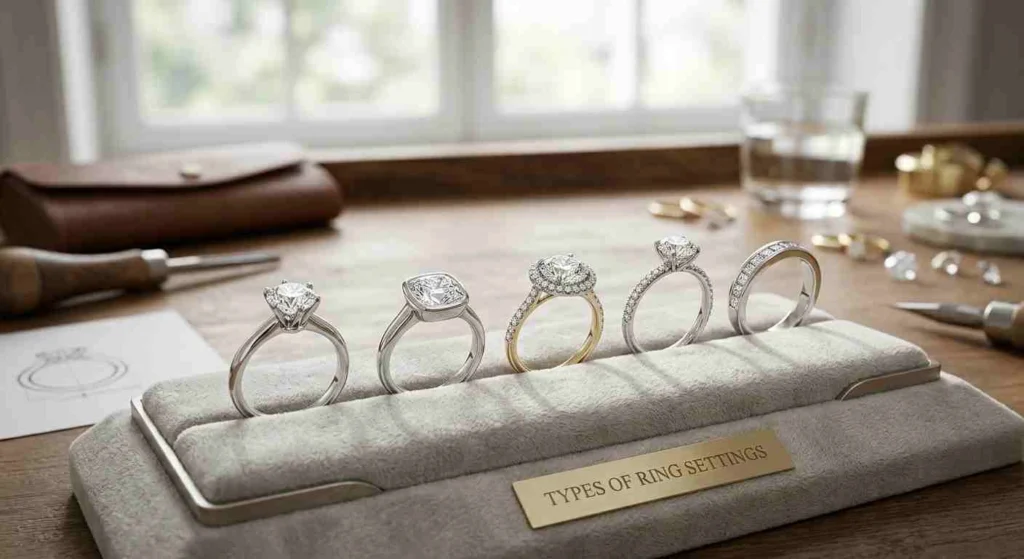
Understanding the Role of a Ring Setting
A ring setting is the upper portion of a ring that secures the main gemstone to the band (also called the shank). Beyond aesthetic presentation, all types of ring settings serve three main functions:
- Structural Protection: It shields vulnerable points of the gemstone such as the girdle and sharp corners from chips and impact.
- Light Performance: The design dictates how much light enters and exits the gemstone, directly influencing its brilliance and fire.
- Wearability: It governs how smoothly the ring fits against skin and clothing during day-to-day activities.
Classic Types of Ring Settings for Everyday Wear
Traditional options focus on highlighting the main stone with clean lines and proven craftsmanship. These styles remain popular due to their timeless appeal and ease of repair.
1. Solitaire Setting
The solitaire setting is a classic choice featuring a single gemstone resting on a plain metal band. Free from additional side stones, it focuses entirely on the centerpiece gem.
Because the design is minimalist, it requires less metal, making it one of the most budget-friendly choices among classic styles. However, because the center stone stands alone, any lower clarity or color grades in the diamond are more noticeable.
2. Prong Setting
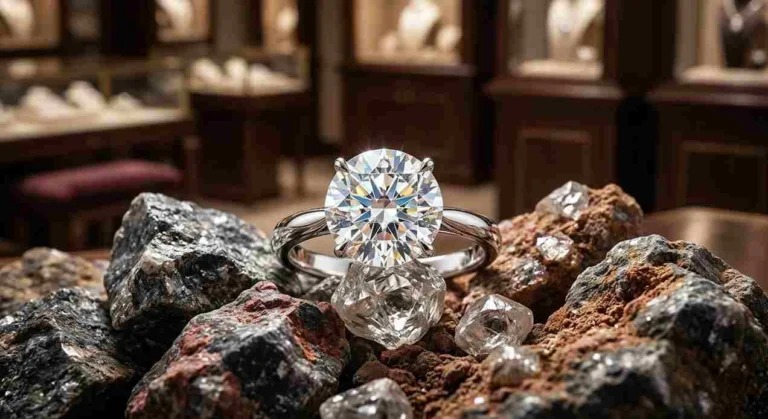
A prong setting uses tiny metal claws (usually 4 or 6) that grip the diamond from the edges, holding it up like a bowl.
- Why people love it: Because very little metal covers the stone, light enters from every angle. This gives your diamond maximum sparkle.
- The drawback: High prongs can catch on clothes, hair or sweater knit. Over years of wear, prongs can loosen or bend, so they need a quick check-up by a jeweler every now and then. If you want to see how this style holds up after years of daily wear, many long-term wearers share their experience on Reddit’s engagement ring community.
- Best for: Anyone who wants their diamond to shine as bright as possible and doesn’t mind minding their hands during heavy work.
3. Bezel Setting
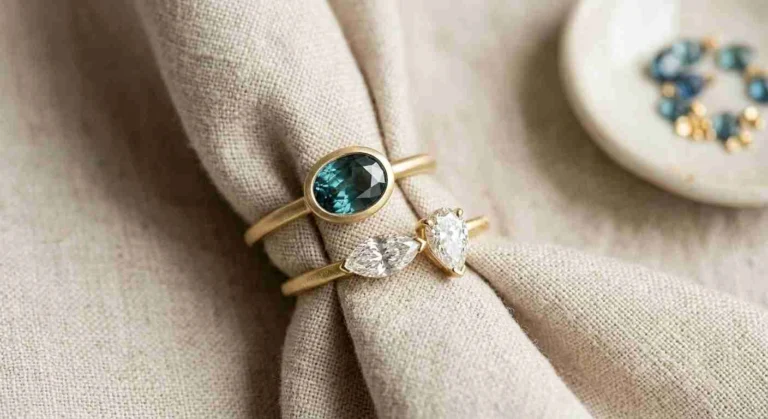
A bezel setting uses a solid metal collar that completely surrounds the perimeter of the gemstone. Instead of holding the gem at isolated points, the metal rim laps slightly over the stone’s top edge.
This design makes the bezel setting super durable by completely shielding the diamond’s fragile edges from hard bumps. With no raised prongs to snag on your clothes, the ring sits smooth and low-profile. The only tradeoff is that less light enters from the sides, slightly softening the diamond’s overall sparkle compared to a prong setting.
Decorative and Vintage-Inspired Ring Settings
Decorative options incorporate detailed metalwork and accent stones to enhance the visual footprint of the main gem.
| Setting Style | Visual Effect | Durability & Protection | Maintenance Needs |
| Solitaire | Minimalist & focused | Moderate (depends on prong count) | Low |
| Prong | High light reflections | Moderate; exposed claws | High (Annual inspection) |
| Bezel | Smooth & protective | High; solid metal coverage | Very Low |
| Halo | Expanded footprint | Moderate; protected center | Medium (Soft brush cleaning) |
| Pavé | Continuous shimmer | Low-Moderate; delicate prongs | High (Gentle cleaning) |
| Channel | Sleek & flush | High; recessed stones | Low-Medium |
1. Halo Setting
A halo setting places a ring of smaller accent stones around the center gemstone. This layout expands the overall diameter of the ring head.
Architecturally, a halo setting allows a smaller center diamond (such as a 0.75-carat stone) to achieve the visual presence of a 1.25-carat diamond. This makes it an effective strategy for maximizing visual impact within a strict budget. The trade-off lies in cleaning complexity: dirt and oils accumulate easily underneath the halo bridge, requiring frequent soaking and soft-brush washing.
2. Cathedral Setting
The cathedral setting draws inspiration from traditional archways. Metal slopes rise from the shank to elevate the mounting point high above the finger.
By raising the stone, the cathedral setting adds dramatic height and profile presence. It works seamlessly with solitaire or halo heads. However, the raised profile increases the likelihood of accidental bumps against hard surfaces, requiring extra mindfulness during wear.
Modern Types of Ring Settings
Contemporary designs use precision engineering to embed stones directly into the band or hold them through mechanical tension.
1. Pavé Setting
Derived from the French word for “paved,” the pavé setting features small diamonds set closely together inside tiny drilled holes along the band. Microscopic prongs hold each accent stone in place.
This technique creates a continuous wall of shimmer across the metal surface. Despite its striking appearance, micro-pavé requires careful handling. Sharp lateral impacts to the band can deform the delicate micro-prongs, leading to lost accent stones over time. Resizing a full pavé band is also exceedingly difficult without disturbing the stone channels.
2. Channel Setting
In a channel setting, small diamonds are placed side-by-side inside a metal groove. Two parallel metal walls lock the stones securely along their top and bottom edges.
Because the gems are recessed below the metal surface, they are completely safe from snagging and edge impacts. Channel designs offer an excellent balance of brilliance and durability, making them a popular choice for wedding bands and active routines.
3. Tension Setting
A tension setting drops prongs and bezels completely, using a sprung metal band to press against the diamond’s sides and lock it in place. This creates a bold, modern look where the stone seems to float in mid-air. Because these rings require tough metals like platinum and precise engineering, they cannot be resized normally meaning a change in finger size usually requires remaking the entire ring.
Evaluating Different Types of Ring Settings for Your Lifestyle
Choosing among various types of ring settings requires balancing personal style preferences against physical demands:
- High-Impact Daily Use (Sports, Healthcare, Manual Work): Bezel and channel settings provide maximum physical armor against blunt force and eliminate sharp edges that snag on materials.
- Low-Impact Daily Use (Office Work, Formal Environments): Prong, solitaire and cathedral settings perform exceptionally well where light interaction is prioritized and impact risks are low.
- Budget Optimization: Halo settings maximize the perceived surface area of the center stone, offering a larger visual display without the exponential cost increase of a larger single stone.
Frequently Asked Questions
1. Which types of ring settings offer the greatest long-term security?
Ans: The bezel setting offers the highest degree of physical security. By wrapping a continuous wall of metal around the gemstone’s entire rim, it shields the stone from chips and prevents it from loosening due to snagged prongs.
2. Can all types of ring settings be resized easily?
Ans: No. While solitaire, bezel and classic prong settings can usually be resized up or down by 1–2 sizes, settings with continuous accent stones such as full pavé bands or mechanical tension settings cannot be resized using standard jeweler methods.
3. How often should a ring setting receive professional care?
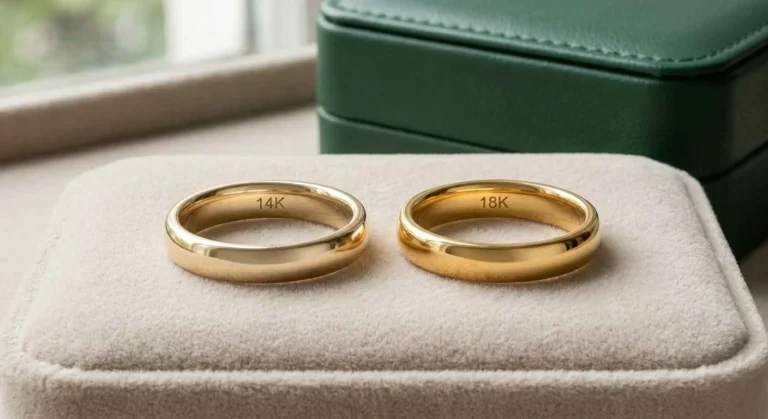
Ans: Regular check-ups every 6 to 12 months keep your ring secure by catching loose gems, bent prongs or worn metal early. Pairing the right design with a durable metal like platinum, 14K or 18K gold ensures your setting fits both your style and everyday routine.