Why Diamond Rings Always Feel Expensive | The Cost of Mining and Cutting
The journey from deep inside the earth to your finger is very long, hard and costly. It takes massive machinery, large work crews and highly skilled experts just to dig up and polish rough gems. Thousands of pounds of rock and dirt must be cleared to yield a single small stone, which explains why diamond rings always feel expensive right from the extraction phase.
After mining, expert jewelers use modern lasers and specialized equipment to shape the gem. Their main goal is to trap and bounce light to unleash maximum brilliance. However, cutting a rough stone wastes significant original gem weight. Because cost adds up at every single point of this complex supply chain, it becomes clear why diamond rings always feel expensive by the time they hit store display cases.
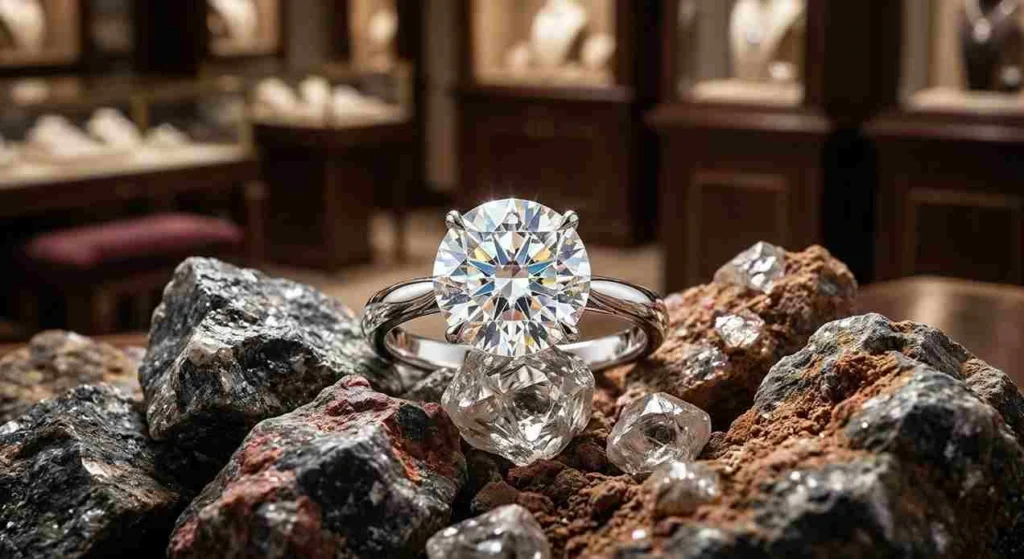
- Mining and Extraction: Removing tons of earth requires expensive heavy machinery, fuel and intense labor yield after yield.
- Precision Cutting: Laser-cutting rough stones discards a high percentage of raw weight, driving up total production expenses.
- Supply Chain Costs: Import tariffs, shipping insurance, logistics and multi-tier distributor markups stack up to make retail prices surge.
What Role Do the 4 Cs Play in Making a Diamond Ring So Costly?
The classic 4Cs—carat, color, clarity and cut serve as the official benchmark for grading center stones. Larger diamond weights hit steep pricing thresholds, causing retail rates to jump exponentially as you cross round numbers. Understanding how rare colorless D-F stones and flawless clarity grades command massive market premiums clarifies why diamond rings always feel expensive to the everyday shopper.
- Carat: Weight milestones like 1.0, 1.5, and 2.0 carats trigger steep, non-linear price jumps.
- Color: Pure colorless gems (D, E, F) command a high premium compared to near-colorless G-H options.
- Clarity: Eye-clean stones free of internal structural inclusions rate far higher on commercial pricing charts.
- Cut: Perfect geometric proportions maximize light output, fiery scintillation and surface sparkle.
Why Do Retail Markup and Store Costs Add So Much to the Final Price?
Main Street jewelry stores carry high physical overhead costs. Your purchase covers far more than raw precious metals and gemstone materials. Prime commercial leases, high-end vault security, insurance policies and sales commissions are baked straight into retail markups, revealing another major reason why diamond rings always feel expensive.
Extensive bench labor fees also raise totals when master craftsmen spend hours creating custom settings, placing pavé accents or crafting hidden halos. Furthermore, choosing a dense platinum band over traditional 14k or 18k gold elevates initial price tags even higher.
- Showroom Rent & Storage: Brick-and-mortar stores pass local real estate fees and insured storage vault costs onto buyers.
- Master Bench Work: Skilled artisans charge premium rates for detailed custom metal shaping and hand-engraving.
- Precious Metal Choice: Heavy platinum mounts cost significantly more than yellow, white or rose gold options.
Why Does Social Media Make Us Feel Diamonds Are Worth the High Price?
For decades, aggressive corporate marketing framed natural diamonds as an indispensable pledge of romantic commitment. The famous mid-century slogan “A diamond is forever” tied human emotion directly to heavy financial investment. This historical marketing campaign permanently altered buyer behavior, proving why diamond rings always feel expensive due to deeply ingrained cultural expectations.
Today, viral social feeds reinforce this psychological dynamic. Algorithm-driven posts, unboxing videos and massive Oval or Marquise cut reveals elevate social status benchmarks, convincing buyers that larger expenditures reflect deeper affection.
- Historical Marketing: Mid-century advertising campaigns established diamonds as a mandatory engagement tradition.
- Social Proof: Viral engagement posts amplify consumer expectations around finger coverage and stone size.
- Status Messaging: Digital trends persuade shoppers that spending more money demonstrates stronger commitment.
What Do Real Buyers on Reddit and TikTok Share About Diamond Pricing?
Shoppers on community forums share practical strategies for maximizing overall ring value without overspending. Many smart shoppers point out that buying outside peak proposal seasons prevents retail hikes, helping demystify why diamond rings always feel expensive during major holidays.
Community members also recommend clever design tweaks that enhance visual size without extra cost. Simple setting adjustments such as opting for slimmer bands or strategic prong placement alter a ring’s profile and make the center gem pop without requiring a heavier carat weight.
- Off-Peak Shopping: Purchasing outside major holiday proposal pushes helps bypass peak retail price hikes.
- Smart Proportions: Selecting elongated fancy shapes makes a modest center diamond look visually larger on the hand.
- Setting Tricks: Slimmer metal bands and subtle halo settings enhance stone size visually for less money.
Are There Smart Alternatives That Look Just as Expensive for Less Money?
Modern buyers increasingly choose high-tech lab-grown diamonds. These stones match natural gems in optical, physical and chemical composition at a fraction of the cost. Analyzing the lower cost of lab production highlights why diamond rings always feel expensive when sourced exclusively from natural earth mining pipelines.
To better understand the artificial scarcity and market dynamics behind diamond pricing, check out this community breakdown on why diamonds are expensive despite being common.
- Lab-Grown Diamonds: Offer identical brilliance, fire, and chemical composition without natural extraction costs.
- Alternative Gemstones: Moissanite, sapphires and rubies deliver unique style and high durability.
- Pre-Owned Rings: Vintage and estate jewelry provide historic character without modern retail markups.
Frequently Asked Questions
1. Do diamond rings keep their value if you want to sell them later?
Ans: Most natural retail rings do not hold their full purchase value due to immediate resale depreciation. Unless a stone possesses extreme gemological rarity or historic provenance, its secondary market price aligns mainly with wholesale trade values.
2. Why are lab-grown diamond rings so much cheaper than real ones?
Ans: Lab-created gems cost less because they eliminate expensive earth extraction, complex global shipping pipelines and heavy import tariffs. Advanced laboratory tech creates high-grade crystals in weeks, explaining why diamond rings always feel expensive only when limited to traditional mined supply chains.
3. Which factor raises the price of a diamond ring the most?
Ans: The center stone’s total carat weight drives total cost more than any other single variable. Crossing major round weight marks causes prices to surge exponentially, while choosing rare colorless D-F grades or flawless clarity ratings also increases totals rapidly.