What should you know about the lab grown diamond vs natural diamond ring difference before buying?
Shopping for an engagement ring or a special piece of jewelry is an exciting moment, but deciding on the right diamond can get confusing. With so many options available today, most buyers end up asking jewelers about the main lab grown diamond vs natural diamond ring difference.
While both stones look completely identical on your finger, they are created differently, carry different price tags and hold different long-term values. Knowing these key differences will help you pick a ring that fits your style, budget and personal values perfectly.
What is the main lab grown diamond vs natural diamond ring difference?
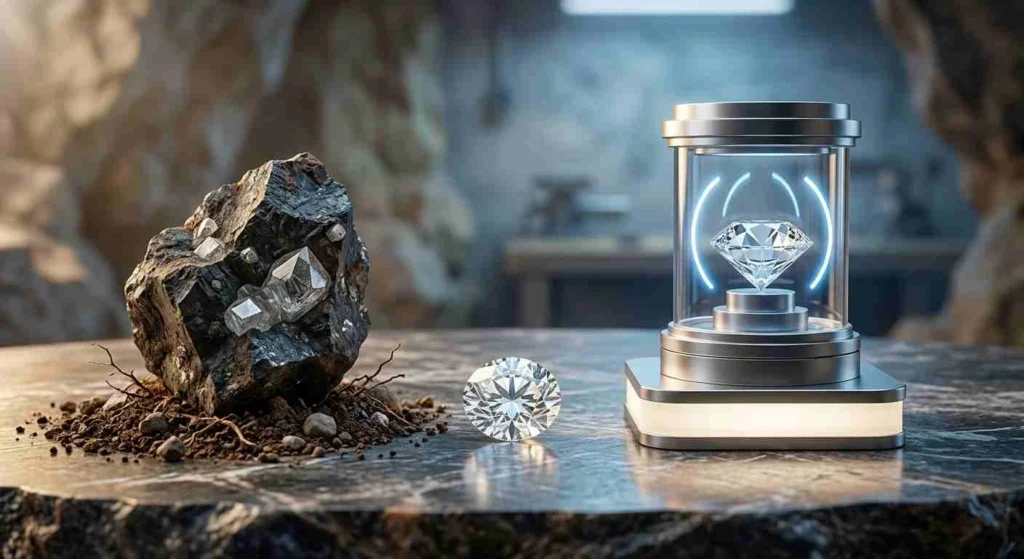
The primary distinction between a lab created diamond and a natural diamond lies in where and how they are created. When evaluating the lab grown diamond vs natural diamond ring difference, origin is the most critical factor to keep in mind.
- Natural Diamonds: These gems formed deep within the Earth’s mantle over billions of years under extreme heat and intense geological pressure. Deep mining operations recover them from the Earth before they are cut and polished.
- Lab Grown Diamonds: These stones are grown inside modern laboratories using specialized technology. Methods like High Pressure High Temperature (HPHT) and Chemical Vapor Deposition (CVD) replicate the natural formation environment, growing a diamond crystal over several weeks.
An easy way to visualize this distinction is by comparing ice. A natural diamond is like ice that forms naturally on a lake during winter, whereas a lab grown diamond is like an ice cube produced inside a home freezer. Both consist of pure carbon structures, but they originate in different settings.
Quick Comparison: Lab Grown vs Natural Diamond Rings
| Feature | Lab Grown Diamond Ring | Natural Diamond Ring |
| Origin | Modern laboratory (weeks) | Earth’s mantle (billions of years) |
| Chemical Composition | Pure Carbon ($C$) | Pure Carbon ($C$) |
| Hardness Score | 10 on Mohs scale | 10 on Mohs scale |
| Visual Appearance | Identical sparkle & clarity | Identical sparkle & clarity |
| Typical Cost | Often 60% to 80% lower | Premium pricing due to rarity |
| Resale Market Value | Generally minimal resale value | Retains a portion of market value |
| Traceability | Fully traceable lab origin | Requires supply chain auditing |
Is a lab grown diamond ring real diamond or fake?
Yes, a lab grown diamond ring features a real, authentic diamond, not a fake imitation like cubic zirconia or glass.
Scientifically, lab created diamonds are identical to natural mined diamonds in their chemical makeup, sparkle and strength. Both score a 10 on the Mohs hardness scale, making them the hardest material used in jewelry that easily resists everyday scratches. When worn on your hand, a lab grown diamond offers the exact same shine, clarity and lifetime durability as a mined gemstone.
How can you spot the lab grown diamond vs natural diamond ring difference visually?
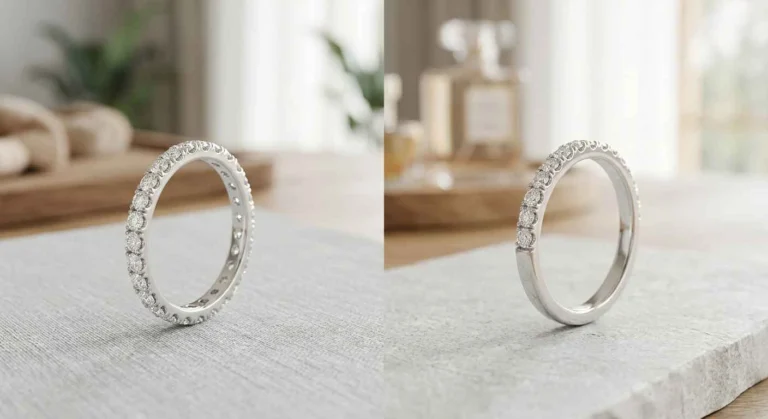
To the naked eye, there is no visible lab grown diamond vs natural diamond ring difference.
Both reflect light, sparkle, and shine in the exact same way, and gem labs grade both using the standard 4 Cs (Cut, Color, Clarity and Carat weight). In fact, even experienced jewelers cannot tell them apart just by looking at them without special laboratory equipment. Gemologists have to use advanced tools to check for tiny growth patterns and most certified lab diamonds also have a microscopic laser serial number etched on the edge that links to an official lab report.
Why is there a price difference between lab grown and natural diamond rings?
The difference in price between lab created and natural diamond rings is often substantial. Lab grown diamonds are typically up to 60% to 80% less expensive than natural diamonds of comparable carat weight and visual quality.
This price gap is largely driven by supply chain dynamics:
- Mining Expenses: Natural diamond retrieval involves resource-intensive mining operations, global shipping logistics and limited natural availability.
- Production Efficiency: Laboratories produce gems in controlled settings with predictable yield schedules. As technology continues to improve, manufacturing efficiency increases, helping reduce production costs over time.
Because of this price variance, buyers can often purchase a larger or higher-clarity center stone while staying within their original target budget.
What are the ethical and environmental differences?
Shoppers today care a lot about ethics and the environment when buying jewelry. While natural diamond mining has improved to avoid conflict stones, it still causes land damage, soil disruption and high water use. In contrast, lab grown diamonds avoid digging up the earth, though they do use a lot of electricity which can be made much cleaner if the factory uses renewable energy.
Which ring holds better resale value: lab grown vs natural diamond?
If long-term financial retention is a primary consideration, understanding the lab grown diamond vs natural diamond ring difference in terms of resale performance is worth noting.
- Natural Diamond Rings: Mined diamonds generally hold a portion of their original purchase value over extended periods due to natural supply limits. While retail markups mean you usually receive less than the original purchase price upon reselling, a recognized secondary market exists.
- Lab Grown Diamond Rings: Lab grown diamonds currently have limited secondary resale demand. Because production can scale continuously to meet market demand, secondhand jewelers rarely purchase pre-owned lab created gems for investment purposes.
If you view your ring as a traditional heirloom intended to carry trade-in value across generations, a natural diamond remains a classic selection. If your goal is maximizing visual size and quality for today’s budget, a lab grown diamond offers practical appeal.
What do buyers commonly say online?
For real buyer experiences and honest discussions on the lab grown diamond vs natural diamond ring difference, many shoppers share their personal reviews on Reddit.
Many online buyers on platforms like Reddit’s r/EngagementRings now share a clear shift in how they choose their rings. Many people prefer lab grown diamonds because the money saved helps them buy a house, travel or pay for their wedding, all while getting a bigger, clearer stone. At the same time, buyers who pick natural diamonds love the emotional feel of owning a rare gem formed by nature over billions of years, showing that the right choice simply depends on your budget and personal values.
Selecting the ideal band size for your ring
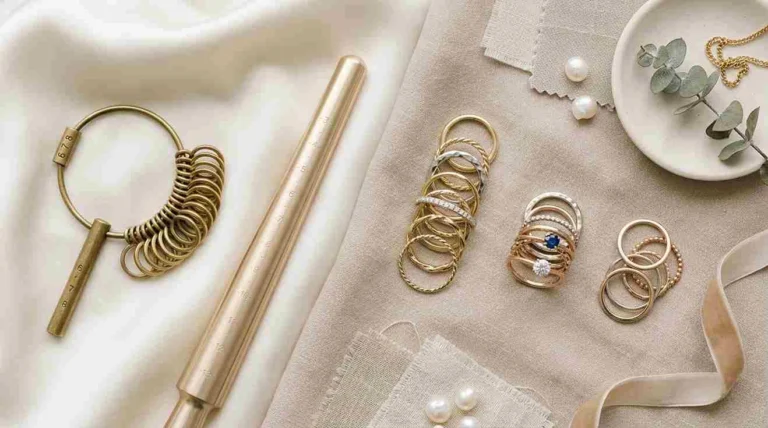
Regardless of whether you choose a lab created or natural diamond center stone, getting an accurate finger measurement is essential. Proper sizing ensures that your ring sits comfortably without tilting or sliding off during daily activities.
Before finalizing your ring order, take time to check your dimensions using reliable measuring tools or an online ring sizing chart to ensure a secure, comfortable fit.
Frequently Asked Questions
Q1: Can a standard diamond tester tell the lab grown diamond vs natural diamond ring difference?
Ans: No, standard diamond testers cannot tell them apart because both stones have the exact same physical properties. These basic testers will identify both lab grown and natural diamonds as 100% real diamonds.
Q2: Do lab grown diamond rings fade or get cloudy over time?
Ans: No, lab grown diamonds will never lose their shine, change color, or turn cloudy over time. If the ring looks dull, it is just due to surface dirt or soap buildup that easily washes off.
Q3: Which ring option is better for an engagement ring purchase?
Ans: It depends on what you prefer: a lab grown ring gives you a bigger, high-quality diamond for less money. On the other hand, a natural diamond ring offers traditional rarity and better long-term resale value.