
Comfort Fit vs Standard Fit Rings | What You Need to Know Before Buying
When shopping for a new ring, most people only look at the style, color or stone on the outside. However, the shape on the inside of the ring is what actually decides how comfortable it feels on your finger every day. The two most common inside styles are comfort fit and standard fit.
Understanding the difference between comfort fit vs standard fit rings helps you pick a band that slides easily over your knuckle, feels good to wear all day and fits your finger just right.
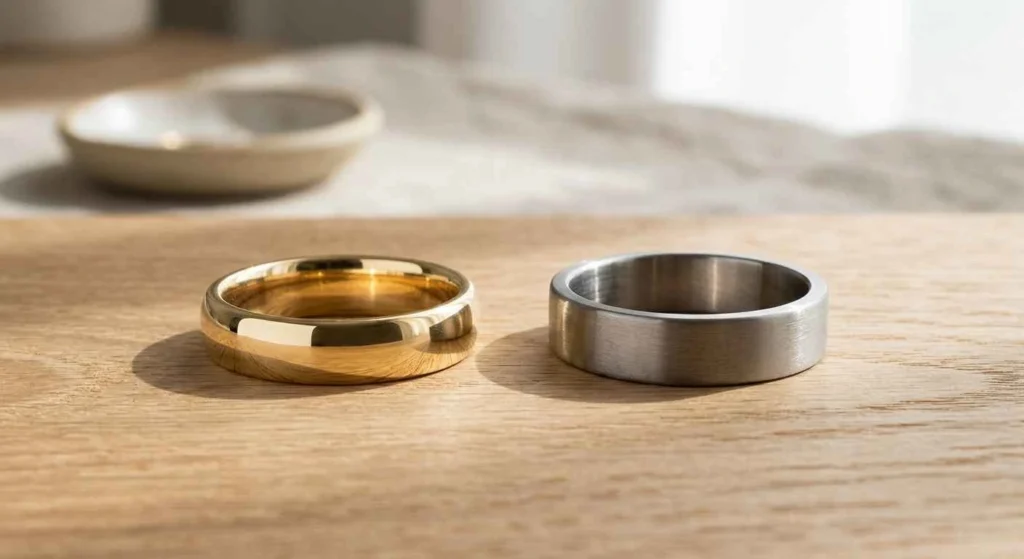
What Is a Standard Fit Ring and How Does It Work?
A standard fit ring features a completely flat inner surface. The interior wall of the ring band stays straight from one outer edge all the way to the other side.
Because the inside of the ring is entirely flat, the entire inner surface area rests directly against your skin. This flat style is the traditional way jewelry makers have crafted rings for centuries and it remains a common standard across many simple bands today.
Key Characteristics of Standard Fit Rings
- Inner Contour: Completely flat across the entire inner wall of the ring.
- Skin Contact: High surface contact where the full width of the ring touches your finger.
- Best Uses: Thin or narrow bands (typically under 3mm wide) and lightweight fashion rings.
Because standard fit rings use a flat piece of metal, they require less total raw material to manufacture. This design makes them lightweight, thin and budget-friendly. However, when comparing comfort fit vs standard fit rings, flat interior edges on wider standard bands can sometimes pull against the skin or trap unwanted moisture underneath during warm weather or active daily use.
What Is a Comfort Fit Ring and Why Is It Shaped Differently?
A comfort fit ring features a domed or rounded inner surface. Instead of a flat interior wall, the metal on the inside curves gently outward toward the center of the band.
This extra curvature significantly reduces friction when sliding the ring over your knuckle. By creating a slightly curved center, it leaves small air gaps near the outer edges, allowing the skin beneath the band to breathe easily throughout the day.
Key Characteristics of Comfort Fit Rings
- Inner Contour: Slightly domed or rounded inner wall.
- Skin Contact: Less direct surface contact, resting mainly on the raised center curve.
- Best Uses: Wide bands (4mm or wider), men’s wedding bands and heavier metal rings.
Because of this rounded interior shape, comfort fit bands require additional metal weight during the crafting process. This manufacturing process makes the ring feel slightly heavier, more substantial and extremely durable for continuous daily wear.
What Are the Main Differences Between Comfort Fit vs Standard Fit Rings?
When you analyze comfort fit vs standard fit rings side-by-side, clear differences emerge in their shape, daily feel and how they sit on your finger:
| Feature | Standard Fit Ring | Comfort Fit Ring |
| Inside Surface | Completely flat wall | Domed and rounded interior curve |
| Knuckle Glide | Can catch or feel tight at joint | Slides smoothly across the knuckle |
| Sizing Feel | Feels true to standard measured size | Feels slightly roomier (0.5 size adjustment recommended) |
| Metal Weight | Standard lightweight feel | Slightly heavier due to extra internal metal |
| Ideal Band Width | Best for narrow bands (1mm to 3mm) | Best for wide bands (4mm to 8mm+) |
Understanding the Sizing Differences
Because a comfort fit ring has less overall metal touching your skin directly, it creates a looser feeling than a standard flat band of the exact same size.
Professional jewelers widely recommend choosing a half size smaller when purchasing a comfort fit ring, particularly for wider bands. For instance, if your finger measures a standard Size 10 on a flat sizing gauge, a Size 9.5 in a comfort fit style will generally yield the safest and most comfortable fit.
What Do Real Wearers Say About Comfort Fit vs Standard Fit Rings?
Feedback and real-world experiences shared across popular online communities reveal clear preferences based on personal activity levels and finger anatomy when deciding between comfort fit vs standard fit rings. To see how real buyers discuss this issue on community forums, read this discussion on standard vs comfort ring sizing to learn from their personal experiences.
1. Navigating Larger Knuckles
Wearers who have larger or prominent knuckles frequently mention that flat standard fit rings scrape or get stuck at the joint during removal. Switching to a rounded comfort fit band allowed them to slide the ring past the knuckle smoothly without being forced to choose an oversized ring that spins around loosely at the base of the finger.
2. Eliminating Daily Pressure Points
People who work actively with their hands, type on computers or lift weights note that wide standard fit rings can press firmly into the skin, leaving sharp indentation marks after a long workday. The rounded interior edge of a comfort fit design distributes pressure evenly, preventing skin pinching and soreness.
3. Preventing Trapped Sweat and Irritation
People living in humid climates or working out regularly share that flat standard fit bands often trap sweat against the skin, occasionally causing minor redness or irritation. The subtle curvature of comfort fit bands allows tiny gaps for airflow, reducing moisture buildup under the metal.
How Do You Choose Between a Comfort Fit and a Standard Fit Ring?
Deciding on the best option comes down to your personal lifestyle, budget and the specific width of the band you prefer when evaluating comfort fit vs standard fit rings.
Choose a Comfort Fit Ring If:
- You are selecting a wide ring band (4mm, 6mm or wider).
- You have larger knuckles that make putting on flat rings uncomfortable.
- You intend to keep your ring on continuously during work, sports and hobbies.
- You enjoy a solid, heavier ring that feels premium on your hand.
Choose a Standard Fit Ring If:
- You prefer delicate, ultra-thin or narrow bands (under 3mm).
- You like lightweight jewelry that sits flat and low against the finger.
- You are shopping on a tight budget for precious metals.
- You are buying temporary fashion pieces or simple stackable bands.
Frequently Asked Questions
1. Does a comfort fit ring run bigger than a standard fit ring?
Ans: Yes. Because the inner edges curve away from the skin, less surface area touches your finger. This unique shape leaves extra room inside, making a comfort fit ring feel approximately half a size larger than a flat standard fit ring of the exact same measured size.
2. Can you resize a comfort fit ring easily?
Ans: Yes, most comfort fit rings made from soft precious metals like gold, silver or platinum can be resized by a professional jeweler without issue. However, bands made from hard alternative metals like tungsten carbide or titanium cannot be resized, regardless of whether they have a standard or comfort fit interior.
3. Are comfort fit rings more expensive than standard fit rings?
Ans: Comfort fit rings can cost slightly more because carving out the rounded inner curve requires extra metal weight during manufacturing. However, this price difference is generally small compared to the overall metal quality and overall craftsmanship of the piece.


One Comment