Understanding the Side Profile of Your Ring
Think of buying a ring like picking a new pair of shoes. It might look gorgeous in the box but if it pinches when you walk you won’t wear it. Most people only look at the top sparkle, but the side view determines if it actually feels good on your finger.
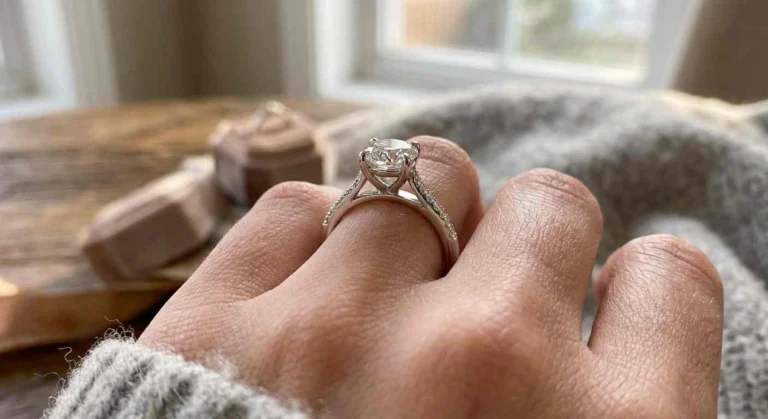
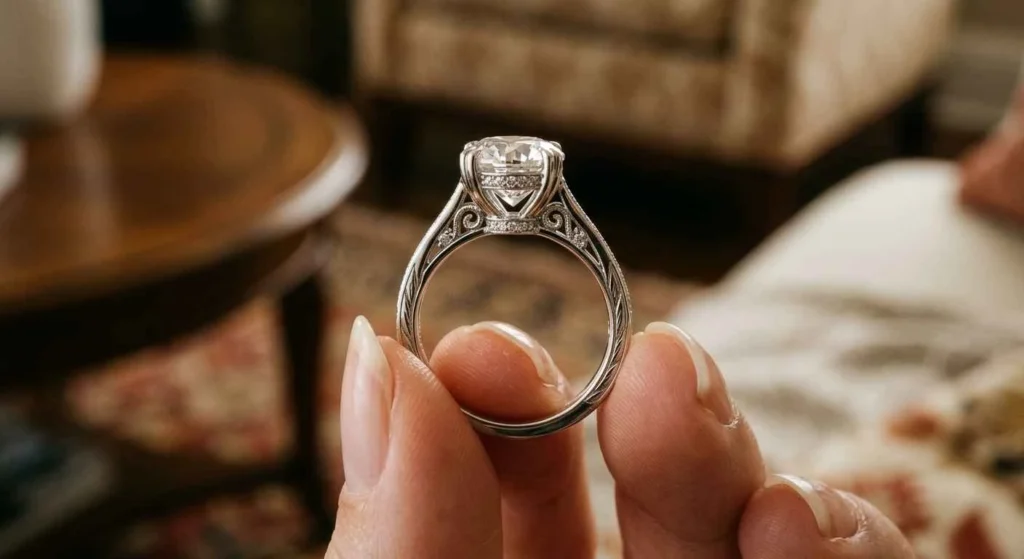
In jewelry design, this side view is called the setting height. It controls how high the gem sits, how much light hits the stone and whether the prongs snag on your favorite sweater. Checking the Side Profile of Your Ring ensures it stays comfortable for daily wear.
Why Does the Ring Setting Height Matter for Daily Comfort?
The height and shape of a ring the distance from the band to the top of the stone directly impacts your daily routine. High profile settings look impressive but catch on clothes and hair, while low-profile settings sit close to the skin, making them a practical, snag-free choice for active hands.
A friend of mine experienced this as a nurse wearing a tall diamond ring that kept catching on her medical gloves and loosening the prongs. Switched to a lower setting, the snagging stopped completely, proving how much the side profile of your ring influences daily wear.
How Does the Setting Height Affect Diamond Sparkle and Light Exposure?
A diamond needs light to sparkle properly. Light enters through the crown and sides, bounces around inside the gemstone facet walls and reflects back to your eye. The design and side profile of your ring determine how much light can enter from the sides:
- Open Gallery Settings: Designs with open arches let extra light hit the stone from the sides. This maximizes brilliance and fire without needing a larger stone.
- Closed Bezel Settings: Settings like a deep bezel cup shield the sides of the stone with metal. While this offers high physical safety, it reduces side light exposure, resulting in a softer glow rather than bright flashes.
| Profile Type | Light Exposure | Daily Safety & Durability | Best For |
| High Profile | High side light exposure | Requires careful handling around fabrics | Special occasions & open basket settings |
| Low Profile | Balanced side light exposure | High resistance to accidental bumps | Active lifestyles & heavy hand use |
What Role Does the Side Structure Play in Setting Security?
The side view shows the structural foundation holding your center diamond in place. Key elements built into the side profile of your ring include:
- Prongs & Bezel Walls: The vertical metal grips that hold the gemstone securely from the base up.
- The Gallery Wire: The underlying support frame that keeps the center basket stable.
- Bridge & Shoulders: The sloped metal support connecting the band shank to the main head.
A thin or weak side structure can bend easily when bumped against hard surfaces like car doors or metal railings. Selecting a ring with a reinforced gallery wire ensures your setting stays straight and secure for years.
How Can Hidden Details in the Side View Personalize Your Setting?
The side view offers dedicated space for hidden artistic details that are only visible to you or someone standing close. Custom ring designers use the side profile of your ring to add personal flair without altering the simple top view, a feature many buyers on community forums like Reddit frequently praise for making their settings feel truly unique.
- Hidden Halos: A tiny circle of micro-diamonds set right beneath the main stone basket.
- Filigree and Vintage Scrollwork: Delicate metal patterns carved along the side walls.
- Birthstones & Custom Engravings: Insetting small accent stones or initials along the inner bridge.
These subtle accents give a traditional solitaire setting a custom feel while keeping the top view simple and clean.
How Does the Ring Structure Help It Fit Flush With a Wedding Band?
Matching an engagement ring with a wedding band depends entirely on the height and shape of the setting basket.
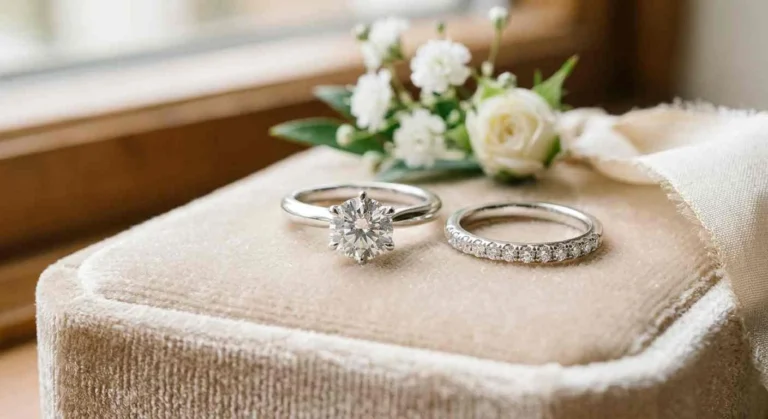
If the center basket sits raised above the band, a standard straight wedding band can slide directly underneath it, creating a seamless flush fit. If the basket rests low against the finger base, a straight band will hit the setting, creating an unwanted gap between the two rings. Paying attention to the side profile of your ring early helps you decide whether you need a straight, curved or contoured wedding band.
What Are the Most Common Profile Styles Available Today?
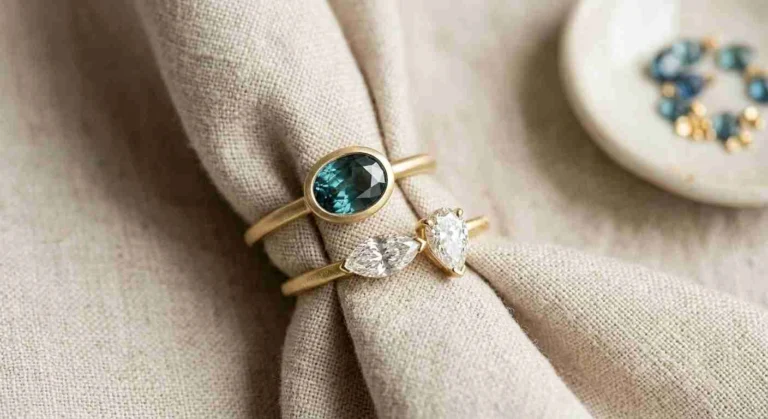
When shopping for an engagement or anniversary ring, you will encounter several distinct profile designs. Each style changes the look and height in a different way:
- Cathedral Profile: Features sloped metal arches extending from the band to support the center setting. It elevates the stone gracefully while providing extra structural stability from the sides.
- Peg Head Profile: A classic setting where the center head attaches directly on top of a plain band. It creates a striking, high-standing presentation but leaves the stone base more exposed to bumps.
- Trellis Profile: Incorporates intersecting, woven prongs visible from the side view. This artistic frame holds multiple stones securely while providing open side pathways for natural light entrance.
How to Choose the Right Setting Height for Your Hand Size?
Hand proportions and finger lengths play a big role in how a setting looks and feels on your hand.
People with shorter fingers often find that lower-profile settings look more balanced and feel lighter during movement. On the other hand, individuals with long or slender fingers can wear higher settings comfortably. Trying on different setting heights allows you to see how the side profile of your ring interacts with your finger length and daily hand movements.
Frequently Asked Questions
1. What is the ideal profile height in mm for daily wear?
Ans: A medium setting height (around 6 mm to 7 mm from the finger base) is the most balanced option. It provides enough space for light exposure while sitting low enough to avoid catching on clothing or gloves.
2. Can you change a high-profile ring setting to a low-profile setting later?
Ans: Yes, a jeweler can adjust or replace the center head basket to lower the stone position. However, lowering the setting may require modifying the bridge or picking a contoured band if you want a flush wedding stack.
3. Does a low-profile setting make a diamond look smaller?
Ans: No, the top surface dimensions of the diamond remain identical regardless of height. However, a high setting elevates the stone, bringing it closer to the eye and making its presence feel more prominent.