A Quick Introduction to Engagement Ring Anatomy & Terminology
When you start shopping for an engagement ring, either online or in a store, terms like Prongs, Shank and Gallery Rail can quickly get confusing. But getting a handle on engagement ring anatomy & terminology is actually pretty simple once you break it down. A ring isn’t just a basic metal loop with a stone stuck on top, it’s made up of several small pieces designed to keep the diamond safe and make the ring look great.
Knowing the names of these basic parts makes a huge difference when you’re buying. It helps you explain your ideas to a jeweler without any confusion, pick a design that fits your everyday routine and make sure you get the best ring for your money.

What Is Engagement Ring Anatomy and Why Does It Matter?
Understanding engagement ring anatomy & terminology refers to learning all the individual components that form the complete ring structure, including the stone mounting, the metallic band and the underlying support framework.
Understanding these terms provides three clear benefits during the shopping process:
- Clear Communication for Custom Designs: When you know the correct names of each section, you can explain exactly what you want to a custom jeweler without miscommunication.
- Choosing the Right Level of Durability: Different settings offer varying levels of protection for the center stone. Knowing how parts like prongs or bezels function helps you choose a ring suitable for your daily routine.
- Better Budget Management: Minor design tweaks such as changing the metal weight of the shank or adjusting the complexity of the head can impact the final price. Recognizing these components helps you control costs.
What Are the Main Parts of an Engagement Ring Structure?
To master engagement ring anatomy & terminology, it helps to divide the structure into two primary sections: The Head and The Shank.
1. The Head (Upper Portion)
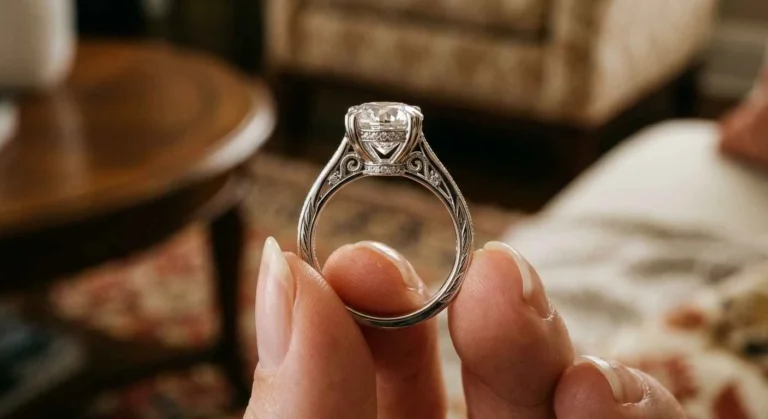
The head is the top section of the ring responsible for holding the main diamond or gemstone in place. It consists of several smaller features:
- Center Stone: The primary diamond or gemstone featured at the center of the design.
- Prongs (Claws): Small metal tines that extend up and over the crown of the gemstone to clamp it securely. Most rings feature either four or six prongs.
- Bezel: An alternative to prongs where a solid collar of precious metal surrounds the outer rim of the center stone.
- Gallery Rail: A horizontal band of metal that connects the prongs halfway up the head, providing extra structural reinforcement to keep the prongs from spreading apart.
- Bridge: The lower structural framework of the head that sits directly above the finger.
2. The Shank (Lower Metallic Band)
The shank is the circular band that fits around the finger. In basic engagement ring anatomy & terminology, the lower band is divided into specific areas:
- Shoulders: The upper sides of the shank that slope upward to meet the head structure. Shoulders can be straight, tapered or split.
- Base (Sizing Area): The bottom portion of the ring band that sits against the palm side of the hand. This is the solid metal area where jewelers cut or add metal when resizing a ring.
How Do Ring Settings Hold the Center Stone Securely?
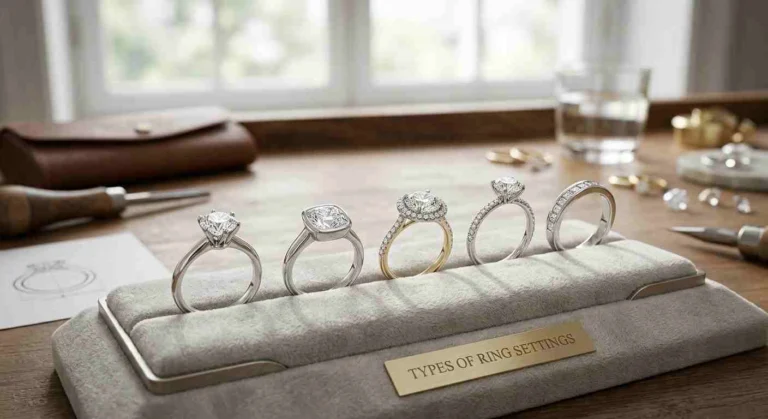
In jewelry terminology, a “setting” refers to the method used to mount and secure gemstones onto the metal structure. Learning this area of engagement ring anatomy & terminology highlights how each setting offers distinct benefits regarding security, light performance and style:
- Prong Setting: Secures the center stone using tiny metal claws. This open design allows maximum light to enter the gemstone from all sides, increasing sparkle and brilliance.
- Bezel Setting: Completely wraps the perimeter of the gemstone in metal. It offers maximum protection against accidental impacts and prevents snagging, making it ideal for active lifestyles.
- Halo Setting: Features a perimeter of smaller accent diamonds encircling the main center stone. This creates the illusion of a larger center diamond while adding extra sparkle.
- Pave Setting: Small diamonds are set closely along the shank using tiny metal beads, creating the appearance of a solid paved surface of diamonds along the band.
Real Buyer Experience: The Importance of Terminology
Shoppers frequently share their purchasing experiences on community forums and social media platforms like Reddit and Facebook groups. For real community advice and discussions on choosing the right setting, check out this crowdsourced engagement ring guide on Reddit from buyers who have been through the process. A recurring topic among first-time buyers is how essential engagement ring anatomy & terminology is when evaluating daily comfort.
Buyer Experience: On a popular jewelry discussion board, a user shared that they purchased a high-profile prong ring online based solely on top-down photographs. After wearing it daily, they realized the high head height caused the center stone to constantly catch on clothing, pockets and gloves during work. Had the buyer understood terms like “High-Profile Head” versus “Low-Profile Bezel Setting” beforehand, they would have selected a setting designed for low-clearance wear.
Understanding terminology allows you to evaluate how a design will function in real life rather than relying strictly on appearance.
Quick Comparison Table: Key Terminology at a Glance
| Terminology | Simple Definition | Role in Daily Use |
| Head | The upper mounting structure | Holds and displays the center stone |
| Shank | The metal band wrapped around the finger | Provides structural shape and support |
| Prongs | Metal claws extending over the stone | Clamps the gemstone in place |
| Gallery Rail | Horizontal wire framework inside the head | Stabilizes prongs to prevent bending |
| Base | Bottom section of the metal band | Allows jewelers to perform resizing |
Frequently Asked Questions
Q1. What is the difference between the Head and the Shank of a ring?
Ans: The Head is the upper section designed to hold the gemstone and its securing mechanism, while the Shank is the metal band that encircles the finger to support the ring structure. Knowing basic engagement ring anatomy & terminology helps you identify both parts easily.
Q2. Which setting type is safer for daily wear: Prongs or Bezel?
Ans: A Bezel setting is safer for daily wear because the metal completely encircles the gemstone edges, shielding it from physical impact. A Prong setting allows more light exposure but leaves the edges of the stone exposed to potential snags.
Q3. What is a Gallery Rail and why is it important?
Ans: A Gallery Rail is a structural metal bar running horizontally between the prongs. It reinforces the frame, preventing the prongs from bending outward and ensuring the center stone remains tightly secured over time.