How to Match Your Wedding Band and Engagement Ring Easily
Have you ever bought two beautiful things, only to find out they just do not look good together? A lot of couples face this exact problem when buying bridal jewelry. You pick a stunning engagement ring, but when you put a wedding band next to it, there is an awkward gap, or even worse, the rings end up scratching each other. Without knowing what to look for, finding two rings that sit nicely and feel comfortable can feel pretty confusing.
Learning a few easy wedding and engagement ring matching tips will save you from making expensive mistakes. It will also make sure your rings fit smoothly on your finger for years to come. Whether you want both rings to sit completely flat against each other, try a trendy mixed-metal style or pick a simple design for everyday chores, this guide covers everything you need to know before buying.

Why Finding the Right Match Matters
Your engagement ring and wedding band are meant for daily wear, so how they fit together impacts both their look and durability. When poorly matched, the rings constantly rub together during normal daily tasks like typing or cooking. Following practical ring matching advice ensures your set stays comfortable while protecting your jewelry over time.
This constant rubbing can cause surface scratches, loosen gemstone prongs or pinch your skin. On bridal communities like Reddit’s r/EngagementRings, many people share how straight bands left unwanted gaps or pinched their fingers after a few months. Taking time to pick a well-fitted combination from the beginning prevents discomfort, repairs and extra costs down the road.
Metal Matching Tips for Your Ring Stack
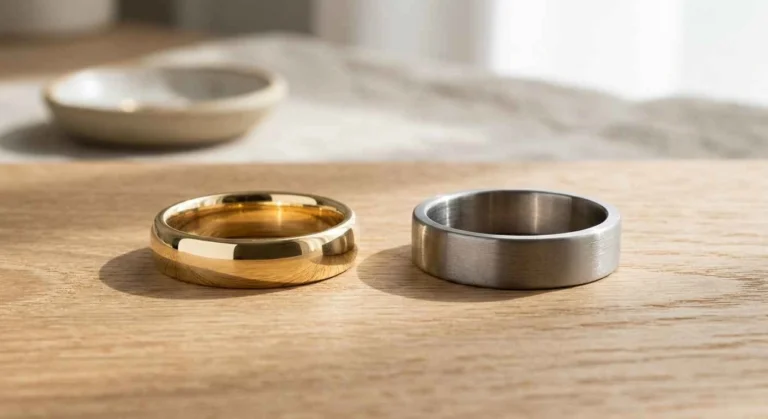
Selecting the right metal combination is the foundation of a successful ring stack. Different precious metals have varying levels of hardness, which determines how they interact over time. For example, platinum is denser and tougher than standard 14k or 18k yellow gold. When a heavy platinum ring continuously rubs against a softer gold ring, it can cause the gold band to wear down faster than expected. Keeping these metal properties in mind is one of the most useful wedding and engagement ring matching tips for long-term wear.
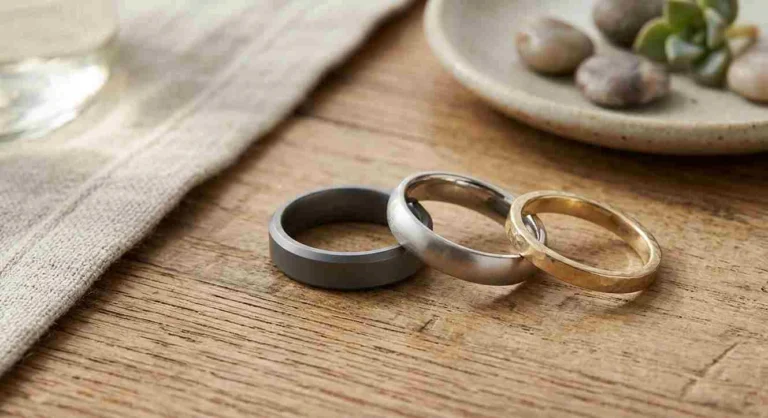
If you prefer a cohesive and uniform look, stick to the exact same metal alloy for both rings. However, if you love the mixed-metal look, such as pairing a warm yellow gold band with a white gold engagement ring, ensure both bands share similar structural strength and width. Additionally, keep long-term maintenance in mind because white gold requires periodic rhodium re-plating to keep its bright shine, whereas platinum naturally develops a soft satin finish over time.
Matching Ring Width and Thickness for Daily Comfort
Ring dimensions play a crucial role in how comfortable your set feels on your hand throughout the day. Pay close attention to both width, which is how wide the ring appears across your finger, and profile height, which is how high the band lifts off your skin. Balance is key because pairing a delicate 1.5mm engagement band with a very thick 5mm wedding band can overpower your main gemstone and make your hand look unbalanced.
Beyond visual balance, applying physical wedding and engagement ring matching tips regarding profile height and thickness ensures everyday comfort. If one ring sits high off your finger while the other is paper-thin and flat, your finger will feel uneven, especially when making a fist or gripping everyday objects. When you write, type, cook or carry shopping bags, rings with complementary thickness glide smoothly together without digging into your neighboring fingers.
Diamond Shape and Setting Combinations That Fit Together
The shape of your center gemstone and the style of its setting dictate what type of wedding band can sit flush beside it. High-set engagement rings allow a traditional straight wedding band to slide directly underneath the center stone without leaving any space. This creates a clean, classic “flush fit” where both rings fit together seamlessly.
However, if your ring has a low setting or an elongated stone shape like an oval, pear, or marquise cut, a straight band will hit the basket and leave an visible gap. In this case, following tailored wedding and engagement ring matching tips like choosing a contoured or curved band that hugs the exact outline of your ring ensures a smooth fit. You should also check that the raised prongs on your engagement ring do not press directly against small accent diamonds on your wedding band to avoid chipping stones.
Matching Your Personal Style and Lifestyle Choices
Your rings need to fit your daily routine, personal style, and work environment. In online bridal communities, women with active jobs such as healthcare, fitness, teaching, or crafting often emphasize practical design over complex details. High-profile settings with exposed prongs can easily snag on clothing, gloves, or everyday equipment. If you are looking for real-world styling ideas, you can check out this Reddit discussion on making your rings look good together where brides share their personal ring combinations. Following these practical wedding and engagement ring matching tips ensures your choices fit your real-life routine rather than passing trends.
If you have an active lifestyle, picking a low-profile bezel or channel-set band alongside a sturdy engagement ring provides great durability without losing style. On the other hand, if you work at a desk or want extra sparkle, a delicate pavé diamond band paired with a halo engagement ring offers classic beauty. Aligning your rings with your daily habits keeps your jewelry looking great and feeling comfortable every day.
Why Proper Sizing Matters for Stacked Rings
Even if you follow every matching rule, your rings will not sit right if the sizing is off. Stacking two rings together creates a wider total band across your finger, which often makes the set feel much tighter than wearing a single ring alone. This extra width traps heat and presses against the skin differently than a thin solitary band. These sizing details are essential wedding and engagement ring matching tips that many buyers forget until it is too late.
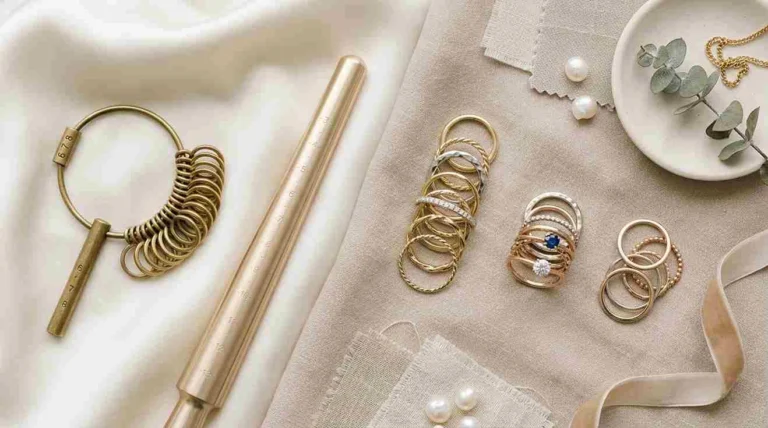
Before buying your wedding band, it is essential to re-measure your finger specifically for stacked wear. You can easily calculate your exact finger measurements and find your perfect stack fit by using a free online ring size calculator. Getting the correct size upfront stops top-heavy rings from spinning, prevents uncomfortable finger pinching, and saves you from needing costly emergency resizings later on.
Frequently Asked Questions
1. Do wedding bands and engagement rings have to match completely?
Ans: No, they do not have to match completely. While many people prefer matching metals for a uniform look, mixing metals or styles is very popular. As long as you follow basic wedding and engagement ring matching tips so both rings sit comfortably together without causing excessive wear on each other, you can easily create a stylish mixed look.
2. How can I stop my wedding band and engagement ring from rubbing against each other?
Ans: You can select a contoured or curved band custom-shaped to fit around your engagement ring. Alternatively, a local jeweler can solder both rings together so they remain aligned as a single unit and never spin or rub against one another.
3. Should I buy my wedding band and engagement ring at the same time?
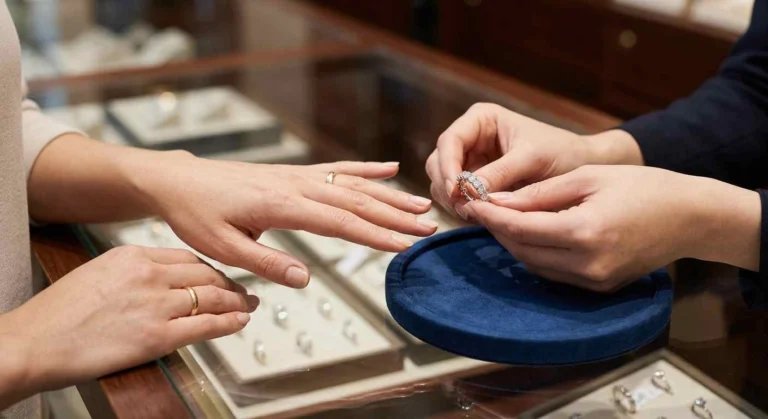
Ans: Buying them together as a bridal set is the easiest way to guarantee a perfect flush fit. If you already own an engagement ring, be sure to take it with you when shopping so you can try on various band styles side-by-side before deciding.